
Illuminati
Illuminati
Biography
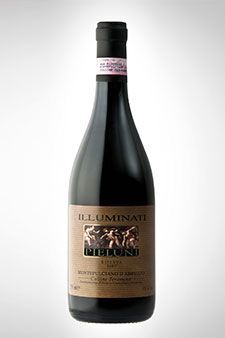
The vineyards of the Illuminati family are located between Controguerra and Neretto in the northern part of the province of Teramo, between the Apennine chain and the Adriatic Sea at an altitude of 1000 feet above sea level. At the end of the 19th century Nicola Illuminati founded the Fattoria Nicò winery, which now, a century later, is directed by his grandson Dino with the aid and assistance of wife and children. Total vineyard surface is 275 acres, with an annual production of 1.2 million bottles of fine overall quality. The story of this firm has unquestionably been a stimulus for other producers of the region, habituated until recently to the sale of their grapes to others who used them to produce blending wine for other regions in less successful vintages. Thanks to its pioneering work of the Illuminati, who developed an entire production cycle from grapes to the bottle, the oenology of the Abruzzo is well considered both in Italy and abroad. The two major crus of the house are both Montepulciano d’Abruzzo Colline Teramane Riserva DOCG, and Pieluni has been particularly appreciate and given important recognition. The harvest for this wine is a late one and is carried out by hand during the last ten days of October. The grapes are destemmed, pressed softly, and then fermented in stainless steel tanks at temperatures of 84-86° Fahrenheit. After twenty days of skin contact and at the end of the alcoholic fermentation, the wine goes through a malolactic fermentation, then racked and aged for two years in small oak barrels. After bottling it is given a further 14-15 months of bottle ageing in natural grottoes in order to bring out all of the power, structure, and complexity of its personality. The other cru is the Montepulciano d’Abruzzo Doc Riserva Zanna, produced only in superior vintages. The Zanna vineyard is situated on hills to the right of the Tronto river as it descends towards the Adriatic Sea, at 950 feet above sea level in the township of Controguerra. The local climate is mild and the grapes are trained in an overhead system with 400 vines per acre. These are among the last grapes to be picked: after a rigorous thinning of the crop and a careful selection of the bunches, the grapes are destemmed, pressed, and fermented in stainless steel tanks at a maximum temperature of 86° Fahrenheit. The wine is then racked into Slavonian oak casks for an aging period of 24-26 months.

Le Ragose
Le Ragose
Biography
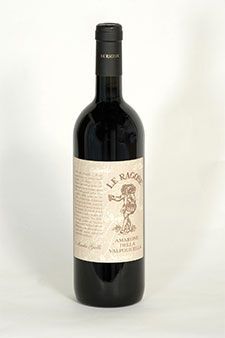
By far the most significant wine of Le Ragose is the Amarone Marta Galli: it bears the name of the founder of the house. It is an uncommon wine because she was an uncommon woman. It was precisely the 77 acres of Le Ragose, purchased in 1969 on the hillsides of the Valpolicella, in the historic area of the township of Negrar, which changed the life of Marta Bortoletto. Married quite young, at 18 years of age, to oenologist Arnaldo Galli, up until then she had been a housewife with four children to raise, Sandra, Marina, Paolo, and Marco. The property was bought for weekends, but it would have been a shame to let its vineyards, uncultivated for eight years, go to seed. And so, while they cultivated the sole vineyard still producing grapes, le Sassine, a mere five acres, the Galli family began the work of restoring the vineyards to productive life and, as a direct consequence, of producing and marketing wine. Marta Galli found herself with the responsibility of a viticultural property to run: her husband, to be sure, took care of the cellar, but all the rest was her responsibility and she was forced to become an entrepreneur. The press, however, was the wine press: she was one of the first female producers in Italy and had chosen, together with her husband, to privilege quality over quantity. The Galli have always believe in this creed, using only the grapes of their own vineyards for their wines.
And if they had a Cabernet Sauvignon in their line, which testified to a certain open-mindedness, they were also among the few in the Valpolicella who had preserved in their vineyards certain minor native grape varieties of their zone: Pelara and Forselina, Dindarella and Negrara, Cagnara and Tirodola, Oseleta. Le Ragose today is an estate with almost 50 acres of vineyards, producing approximately 150,000 bottles per year. The second generation is now in charge: Paolo, with a degree in economics, has substituted his mother; Marco, with a degree in agronomy with a thesis on oenology, has substituted his father in the cellar. It is they who have added alongside the traditional Amarone Le Ragose, the unusual Amarone Marta Galli, fruit of their research. Faithful to tradition, they have not abandoned the pergolas in the vineyards or the Slavonian oak casks in the cellar; they are willing to adopt new cultivation and fermentation techniques, but only after experimentation. Only one principle remains sacred: “the quality of a wine is inseparable from its place of origin and from the people who produce it”.

Marchesi di Barolo
Marchesi di Barolo
Biography
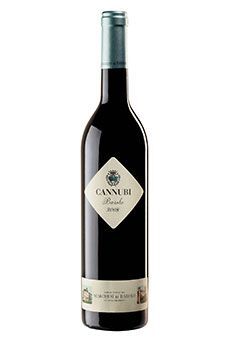
In his book “The Village of Barolo”, canon Domenico Massé wrote, as clearly and unambiguously as possible: “the creation of the type of wine which is now called Barolo must be credited to various Marquis of the Falletti family of Barolo, who produced the wine with every exacting care and attention in their extensive properties in and around Barolo”. Since the year 1929 the Marchesi di Barolo firm has belonged to the Abbona family, now in its third generation of active control of operations in the person of Ernesto Abbona and his wife Annamaria. The grand crus of the house are produced by giving the maximum attention to the matching of the various grapes which are cultivated to the proper sites, those with the most suitable soil and exposure. The objective is to bring out all of the personality and quality of the traditional varieties of Piedmont and the territory in which they are cultivated in order to magnify their unique and inimitable character. The goal is wines of great aromatic purity along with the proper balance of structure and elegance, Nebbiolo of maximum complexity and pleasure to drink.
Various wines are produced, from Dolcetto and Moscato to Freisa and Barbaresco. But the most prestigious selections are the various Barolo crus. This is confirmed by the Barolo from the Cannubi vineyard, the cellar’s most representative wine. The grapes which are utilized come exclusively from the hillsides of Cannubi, a long, slowly rising hill, a site of exceptional completeness where the two major geological formations of the zone, the Helvetian and the Tortonian, meet and mingle. The fermentation begins with a soft pressing of the hand-picked grapes followed by de-stemming and fermentation – in temperature-controlled tanks – at peak temperatures of 30-32° centigrade (86-90° Fahrenheit). The grapes macerate on their skins for ten days during the fermentation and are run off their skins when fermentation is completed. One part of the wine is aged in 3000-3500 liter casks of Slavonian and French oak. Another part ages in 60 gallon, medium-toasted French oak barrels for a period of twelve months. At the end of the aging process the wine is assembled and then aged for a final period of twelve months in bottle before commercial release. A full ruby in color, the wine offers intense aromas of roses, vanilla, liquorice, toasted oak and tobacco. Full and elegant on the palate, ample in body and austere, its flavors recall the aromas first perceived on the nose. The notes of spice and toasted oak are most pleasurably fused and integrated with the character of the wine, which is well suited for lengthy aging and can last as long as 25-30 years.

Oasi degli Angeli
Oasi degli Angeli
Biography
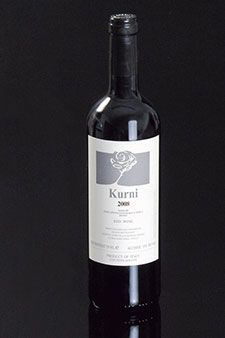
Elenora Rossi and Marco Casolanetti are the young proprietors of Oasi degli Angeli in Cupra Marittima (Ascoli Piceno). Since the very beginning they have been covered with prizes and recognition for their wines. This is not a minor consideration. There is a reason for the extraordinary attention lavished upon them by the wine press. With no significant viticultural and oenological tradition to work with, they have followed a singular, but far-sighted, production philosophy: one sole wine, Kurni, a Montepulciano from a more than forty year old vineyard of bush wines cultivated according to the tenets of bio-dynamic agriculture. The vine density is of record level, 10-15,000 per hectare, and yields per vine are at the minimal level of 250 grams per plant. The wine, in short, is absolutely unique for natural power and concentration, capable of surviving a double challenge with oak without fear of being dominated. After a lengthy period of skin contact in stainless steel tanks (40 days), the wine goes into new small oak barrels for nine months, after which it is then racked into another set of new barrels for a further period of nine months. Production is minimal. The quality of the wine is immediate obvious when tasted. It is an impenetrable ruby red with notes of eggplant purple, opulent and impressive. It is explosive on the nose, of great impact, with formidably intense aromas of cherries under spirits and blackberries, berry fruit, and a crescendo of sensations which include underbrush, tobacco, mocha, and leather. Rich and dense on the palate, with a superior balance between tannins and acidity, it has an overflowing fullness, tasty and vigorous, immensely long and with a finish of coffee, berries, and leather. For temperament and character this is a wine which fully deserves a place in a category defined by writer Luigi Veronelli as wines for sipping and meditation. To drink in perfect solitude. At the table, nonetheless, it is an excellent accompaniment to game and aged cheese.

Ornellaia
Ornellaia
Biography
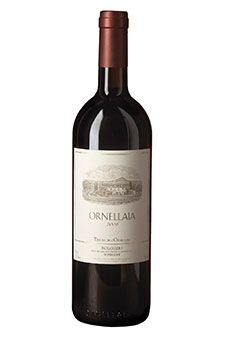
Ornellaia, one of the jewels of Italian viticulture, today the property of Tenute di Toscana, a holding company controlled by the Marquis Frescobaldi family (of which Ferdinando is the chairman), wine producers since 1300, was founded in 1981 at Bolgheri by Marquis Lodovico Antinori. The extraordinary potential of the territory of Bolgheri was not, at the time, as evident as it is today, but Antinori had identified, for the purpose of planting vineyards, an amazingly fortunate series of plots, characterized by the luminosity of the atmosphere and the mildness of the climate, protected by cool winds off the sea by Mediterranean brush. Antinori also knew, thanks to Sassicaia, produced by his cousin, Marquis Niccolò Incisa della Rocchetta, that the Bordeaux grapes which he intended to plant, were ideal for that micro-climate. If it were a human being, one could say that Ornellaia, the wine produced in that spot, was born with a silver spoon in its mouth: in a privileged position, it had the double fortune to see light in 1985, a vintage so exceptional that the wine is still good today, even though it was produced from very young wines, theoretically a handicap for a wine. Its quality is even more exceptional in that Antinori did not even have a cellar to work in: fermentation took place at San Casciano Val di Pesa, in the family winery of Marchesi Antinori of brother Piero Antinori. It was only in 1987 that Ornellaia finally had its own cellars, and it was a structure which created a stir: very modern, daring in its architecture, but hidden in a hollow in the middle of the vineyards with zero impact on the environment. Today the presence in the winery of a high level team, Giovanni Geddes da Filicaia (President) and Leonardo Raspini, assures constant high quality independently of the adversities of the weather and the vintage. At the top of the line is Ornellaia, made from a careful selection of Cabernet Sauvignon, Merlot, Cabernet Franc, and Petit Verdot grapes, equally carefully blended in the cellar. Equally fine is Masseto, pure Merlot, born almost by accident in 1986; the 2001 was unanimously acclaimed all over the world and recognized as one of the world’s finest Merlots (number one in the Top 100 of Wine Spectator).

Orsolani
Orsolani
Biography
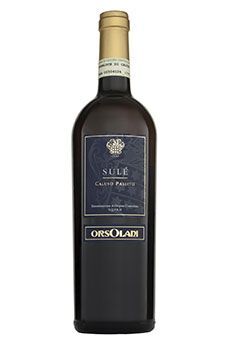
The Orsolani cellars are at San Giorgio Canavese, in the heart of the Erbaluce di Caluso production zone. The firm was founded in 1894, when Giovanni Orsolani, with his wife Domenica, decided to return from the USA, driven by a certain nostalgia for his birthplace. The great-great-grandparents of the current owner opened a restaurant, the Locanda Aurora, Domenica worked in the kitchen while Giorgio took care of the vineyards and cellar to produce wine for the customers. The wine had success and the cellar expanded, to the point that the following generation decided to dedicate its efforts to wine on a fulltime basis. Gian Francesco, the father of the current owner, Gian Luigi, revolutionized Erbaluce production in the 1960’s, dedicating much time to the ripening and fermentation of the grapes. The decisive commitment to Erbaluce came in 1967 when the wine obtained appellation status. The result of these efforts, based entirely on the search for higher quality, brought the Orsolani cellars a dominant position over the past thirty years. Beginning in 1968, with the first production of sparkling wine, a true innovation at the time, the Orsolani cellars obtained DOC status for this type of wine as well. In 1985 La Rustia was born, a wine based on careful grape selection during the harvest, and demonstrated, for the first time, the possibility of using this variety for dry white wines as well. In 1988, after some years of experimentation, barriques were used for the fermentation of the dessert version of the wine in order to reduce oxidation during aging. The result is a great dessert wine, easily comparable to others – the non-aromatic type – in Italy. In 1996 with the Vignot – San Antonio and San Cristoforo – Orsolani introduced a concept of cru not based exclusively on a single grape source but also on techniques of fermentation and aging studied expressly for a precise type of wine. At the present time, Orsolani ferments solely Erbaluce from 37 acres of vineyards, producing 100,000 bottles annually. The finest wines, produced for over twenty years from an accurate grape selection in the finest zones of the township of Caluso are: Sulè Caluso Passito DOC; La Rustia Erbaluce di Caluso DOC; Cuvée Tradizione Caluso Spumante DOC, produced wiht the classic Champagne method.

Podere Poggio Scalette
Podere Poggio Scalette
Biography
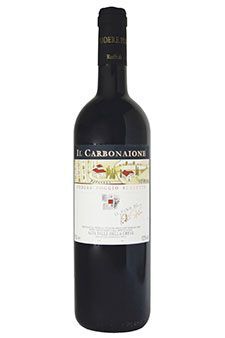
Podere Poggio Scalette was born in 1991 when oenologist Vittorio Fiore and his wife Adriana Assjè di Marcorà purchased vineyard plots and a rural construction, abandoned for years, on the hill of Ruffoli between Greve in Chianti and Panzano in Chianti. The first part of the estate was expanded in 1996 with the acquisition of an adjoining property with cellars and other buildings, a purchase which brought the total property to 88 acres, 38 of which consist of vineyards. Vittorio Fiore is part of that small group of consulting winemakers who are part of the Renaissance of Italian wine. Born in Bolzano, educated at San Michele all’Adige and Conegliano, two of Italy’s finest oenological institutes, he was secretary of the association of Italian oenologists before understanding, at the end of the 1970’s, the career of consulting winemaker in Tuscany (and elsewhere). At Poggio Scalette Fiore has concentrated the professional experience of a lifetime. Under his supervision, the estate’s activities are directed by his wife Adriana and, above all, his son Jurij, a graduate of Beaune in 1993, who is in charge of the vineyards and the cellar. The estate produces only one wine, Carbonaione, which takes its name from the plot on which the estate itself was built. Later on, a second wine was added to the line, Piantonaia, a supple, suave Merlot, well concentrated and complex, but the estate’s fame was created by the original wine, a majestic pure Sangiovese, clean and elegant, balanced and vigorous at the same time. The cru itself is a terraced hillside plot rich in calcareous clay stones with a west-southwest exposure, 1300 feet above sea level. But one of its special characteristics are the grapes: the Sangiovese of Carbonaione is not an ordinary Sangiovese, but is produced from 70 year old vines. They were grated onto American rootstock, in fact, in the years immediately following World War I, in the 1920’s: they were the first Chianti Classico vineyards to be replanted after the devastation caused by the phylloxera louse. The are among the rare existing examples of the so-called Lamole clone of Sangiovese, monuments to the viticultural patrimony of Chianti Classico, once trained and pruned in the classic Gobelet system for bush vines, the oldest in the Mediteranean world.

Renato Keber
Renato Keber
Biography
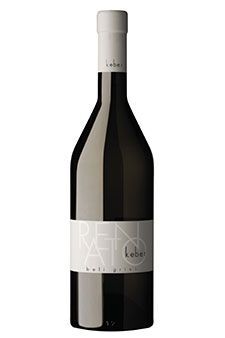
Located in the Collio appellation, at Cormons to be precise, one of Italy’s finest zones for white wine, the Renato Keber winery represents one of the most interesting estates in the oenological panorama of Friuli. The house concentrates its energies and attention on white wines, a logical decision considering its geographical position, but its red wines are equally appreciated by critics and consumers. The vineyards extend over some 32 acres on the hillsides of Zegla Plessiva, and the grapes varieties which are cultivated, divided between the native grapes of the region and well known international varieties, are Tocai Friulano, Pinot Bianco and Pinot Grigio, Chardonnay, Sauvignon, Merlot and Cabernet Franc. Renato Keber, winemaker as well as proprietor of the estate, gives equal attention to the vineyards and the cellar: his wines, clean and elegant, are an excellent expression of the typical character of the Collio appellation, a balanced compromise between tradition and innovation. His top offerings, both red and white, excellent wines which have been well received by critics both in Italy and abroad, range from the very fine Beli Grici, a Collio Bianco DOC which blends Pinot Bianco, Ribolla, Tocai, and Sauvignon, a brilliant straw yellow, floral and peachy, fresh and tasty, to the Chardonnay Riserva Grici, a wine of real personality. And to red wines such as the Merlot Riserva Grici, a Collio Rosso DOC which blends Cabernet Franc and Merlot. And if the Collio Tocai Friulano is a wine noted for its elegance, the standard bearer of the estate was and is the cru, the Tocai Riserva Zegla, independently of the dispute over whether the wine can or cannot be called by the name Tocai. A lovely straw yellow, brilliant, luminous, it is balanced in aroma, elegant, with much finesse, delicate in its sensations of almonds, wild flowers, and ripe yellow fruit. On the palate it is soft and creamy, balanced, pleasurably fresh, with long notes of yellow fruit, aromatic herbs, tasty minerals and a long finish with almonds on the aftertaste. An excellent match to barley soup, pasta and bean soup, risotto with herbs and vegetables, spring omelettes, white meat and matured cheese.

Rivera
Rivera
Biography
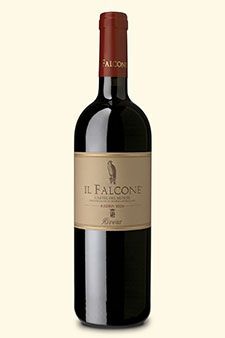
It was in the first years of the 20th century when Giuseppe de Corato decided to purchase the vast estate named Rivera in the Andria plain, one of the finest viticultural areas of northern Apulia. The vine, in fact, has been cultivated there since the days of Magna Grecia, and centuries of selection have identified native grape varieties of high potential, first and foremost Nero di Troia. But this was not de Corato’s sole impulse and inspiration: Andria and its surroundings have a fascination which goes beyond agriculture, to the point that, in the 13th century, it had bewitched even Frederic II of Swabia, the holy Roman Emperor, called for this reason “Puer Apuliae”; it is to him that we owe the construction of the Castel del Monte castle, the mysterious manor, an octagonal edifice of blonde stone which UNESCO has classified as part of the patrimony of humanity and which marks with its enigmatic presence the entire territory. Here, in the 1950’s, Sebastiano de Corato, the son of Giuseppe, founded the Rivera firm on the land purchased by his grandfather: he replanted the vineyards, restructured the old cellars, and created a bottling line. The success of the operation made Rivera a reference point for the oenology of northern Apulia. And precisely for this position of leadership, in the following years, when Sebastiano de Corato was joined by his son Carlo, the house was able to innovate in a way which rendered the viticulture and wine of the region less provincial: noble international grape varieties were planted in the vineyards, both Sauvignon and Chardonnay. Only long and patient work was able to verify the adaptability of these grapes to the local soil and climate, but the final effect was to enrich the viticultural possibilities of the region. Today Rivera gives greater emphasis to native grape varieties, and for this reason has re-launched Nero di Troia, for too long a time a greatly undervalued variety. The two most representative wines from the grape are red wines, both Castel del Monte DOC efforts: Il Falcone represents part of the story of the house, a Riserva wine produced ever since 1950, a blend of Montepulciano and Nero di Troia which reflects the local tradition of that period in time. Puer Apuliae, instead, a relatively recent wine, was first made in 2000 and is a pioneering effort in the creation of high level pure Nero di Troia. It is with wines of this type, produced from close to 240 acres of proprietary vineyards, that Carlo de Corato, now supported by his son Sebastiano who has joined him in the firm, has prepared himself for the challenges of the global markets of the third millennium.

Rocche dei Manzoni
Rocche dei Manzoni
Biography
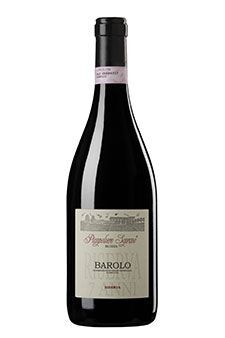
“If you like wine, buy a vineyard” recites an old adage. Valentino Migliorini, who in 1974 was a restaurateur in Caorso with a Michelin star but driven by a passion for Barolo, purchased on old 18th century estate on a hill in Monforte d’Alba in a zone called Manzoni Soprani, surrounded by a vineyard in an excellent position. That vineyard changed his life. He and his wife Iolanda soon moved to Monforte and there created an estate with 125 acres of proprietary vineyards, planted with densities of 4,500 vines per hectare, a state of the art cellar with advanced technology, traditional casks, and thousands of barriques. The potential production capacity of Podere Rocche dei Manzoni is 250,000 bottles annually, but the pride of the house is not in the cellar equipment but in the five crus from which Migliorini obtains, solely in better vintages, the grapes for his prestigious Barolo selections: Vigna d’la Roul, located around the cellars, the historic cru Cappella di Santo Stefano at Perno, Madonna Assunta La Villa in Castelletto, Ciabot d’August in the Ginestra sub-zone of Monforte, and Pianpolvere Soprano. The fact that all of the vineyards are situated in the same township of Monforte d’Alba is a deeply pondered, and by no means casual, choice: profoundly convinced of the infinite possibilities of this part of Barolo, Migliorini has always wanted his wines to be the maximum expression of their point of origin. In addition to Barolo, Migliorini limited himself, in his early years, to the production of the other traditional wines of the Langhe zone, Dolcetto and Barbera d’Alba, but he, with an innovative spirit, soon began an era of experimentation: the first Nebbiolo-Barbera blend of the zone was his Bricco Manzoni, first produced in 1976. In 1978 appeared the Valentino Brut Riserva Elena, a sparkling wine from Chardonnay and Pinot Noir grapes, while, at the same time, the first barriques began to appear in the cellars, a decision which was eventually to mark the wines of the estate, all aged in small oak barrels since the 1982 vintage. The personality which Chardonnay and Pinot Nero express at Monforte d’Alba was shown in 1988 with Angelica and in 1989 with Pinònero, and the character of a blend of Nebbiolo, Cabernet Sauvignon, Merlot, and Pinot Noir was discovered in 1996 with first bottles of Quatr Nas. In 1993 it was even demonstrated that it was possible to produce in the Langhe area a dessert wine with noble rot from Sauvignon and Sémillon. Short pruning, crop-thinning, and low yields (little more than two tons per acre) are a guarantee of quality.

Scacciadiavoli
Scacciadiavoli
Biography
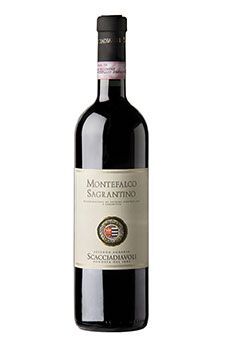
Scacciadiavoli is one of the oldest estates in the territory of Montefalco. The name derives from an old hamlet near the estate’s property, once inhabited by an exorcist (who “chased devils”, the meaning of the Italian name). The purchase of the property by Amilcare Pambuffetti, grandfather of current owners Amilcare junior, Francesco, and Carlo, dates from the middle of the last century. The cellar, built during the second half of the 19th century, is rationally organized and equipped with the latest modern technology; it represents a rare example of agro-industrial architecture of that period. The estate consists of 325 total acres, 88 of which are planted to vines, with a total annual production which will reach 200,000 bottles when all of the vineyards are in full production. The recently completed replanting and extension of the vineyard surface has been done with vine density of 5,000 vines per hectare, a decision which testifies to the commitment and intelligence with which excellence in quality has been placed as an essential objective. “Sola Fides” is the motto engraved on the frontispiece of the cellar and figures on the labels of the wines as well, a brief statement of the estate’s operating philosophy. It is a sentiment which characterizes rural society and expresses the desire to create and accomplish. It is the conviction that the soil rewards those who work it on a daily basis with products of true personality and quality. Scacciadiavoli firmly believes in the territory of Montefalco. The wines which are produced are the typical ones of the zone: Montefalco Rosso DOC and Grechetto Umbria IGT, plus the thoroughbreds of the cellar: first, the Montefalco Sagrantino DOCG which, in the dry version, ages fifteen months in small French oak barrels, six months in stainless steel tanks, and nine months in bottle. Intensely aromatic with notes of red fruit, blueberries, and blackberries, full and warm on the palate, balanced in its acidity and tannins, it is long and sustained right through to a finish and aftertaste which echo the initial sensations. A red wine for red meat, game, and cheese with some age. Second, the Montefalco Sagrantino Passito DOCG, 100% Sagrantino, made from grapes dried on straw mats and fermented in December or January after the harvest. A dense ruby red with an intriguing nose of blackberries, red berry fruit, and coffee, it is sweet, supple, and never cloying. A wine to sip, a wine for meditation.

Tedeschi
Tedeschi
Biography
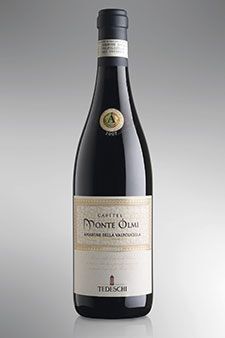
Tedeschi is one of the historic names of the classic part of the Valpolicella. Documents recently found in the family archives demonstrate that the first acquisition of vineyards goes all the way back to 1630. The winery is directed by Renzo Tedeschi along with his children Antonietta, Sabrina, and Riccardo, who continue the work of bringing out all of the character of the terroir begun four centuries ago by their ancestors, producing wines of unmistakable personality which combine tradition and innovation. Since the very beginning the Tedeschi family has aimed for wines with body, structure, and fragrance, balanced and elegant. The working philosophy is based on innovation to obtain higher quality, on the one hand, and absolute respect for tradition on the other, and explains new developments in recent years. In April of 2006 Tedeschi purchased 210 acres of land (a Maternigo property) in the Valpolicella appellation, located between Tregnago and Mezzane di Sotto. A project to plant 75 acres of vineyards has been approved. The planting of the Le Pontare vineyard , situated in the township of Sant’Ambrogio di Valpolicella just a few miles form the cellars, is well under way: 12.5 acres have already been planted and the rest were to be finished by the end of 2008. The new grape-drying facility in Pedemonte, with a capacity of 350 tons of grapes, was finished in 2007. Fermenting facilities have been moved and modernized, and amplified as well. The former fermenting space has been restructured and transformed into an aging cellar with 47 new 1,000 to 5,000 liter casks coopered from Slavonian oak, a total aging capacity of 94,000 liters which has been added to the casks already in the cellars and purchased over the past decade. As far as the wines are concerned, the most important are made from such native varieties as Corvina, Corvinone, Rondinella, and Oseleta, along with Molinara, Dindarella, and Negrara. Among the product lines are “Fabriseria”, limited-quantity wines produced only in special vintages, “Capitel”, which include the historic crus of the house, and “I Classici”, well made and very reasonable in price. The standard-bearer of the winery is the Amarone della Valpolicella Classico Monte Olmi, winner of many prizes and much recognition. An intense ruby red, it shows an expressive nose of cherries, raspberries, and currants, and an elegant body, powerful and long. A wine for game or cheese.

Tenuta Sette Ponti
Tenuta Sette Ponti
Biography
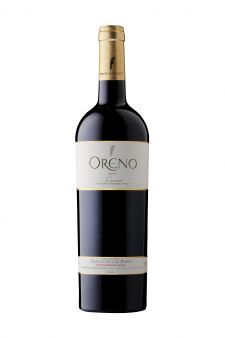
Antonio Moretti, a successful entrepreneur in the field of fashion, has succeeded in putting the province of Arezzo on the map for wine critics of the world. Before him, Arezzo was considered something of a Cinderella of Tuscan oenology. Moretti was a sort of mid-wife who has managed to bring out the potential of the territory, creating wines of high quality, of international status. The champion among the wines of Setteponti is Oreno, an international blend of Bordeaux grapes, Cabernet and Merlot, with a lengthy aging in sall oak barrels: a wine of true finesse, which competes with the great wines of the châteaux of Bordeaux. The other important wine is Crognolo, thoroughly Tuscan, a Sangiovese, the traditional grape of the region, with a small percentage of Merlot. A wine of character, genuine, and rare fascination. Very interesting as well is the Chianti Vigna Pallino (the name of an old vineyard, recently replanted), immediately pleasurable without any sort of oak aging. These wines come from the area of Castiglion Fibocchi in the lower Arno valley, in a landscape frequently painted by Leonardo da Vinci. The estate takes its name from the fact that, in this stretch of the Arno, there are exactly seven bridges which join the two banks. The property originally belonged to the Savoia-Aosta princes who, in turn, had received it from Leopoldo of Hapsburg (it was they who planted the original Vigna Pallino vineyard). In the 1950’s, Alberto Moretti, the father of the current owner, purchased the first lot of 125 acres of vineyards, which included the Vigna dell’Impero, planted by the Savoia-Aosta family in 1935. With successive purchases the Moretti family has put together a property of approximately 825 acres, much of which consists of woods and game reserves, and125 acres of high-density vineyards (seven thousand vines per hectare). 安东尼奥•莫雷蒂(Antonio Moretti),时装界闻名的企业家,成功地将世界酒评家的目光吸引到了阿雷佐(Arezzo)。在这之前,阿雷佐在托斯卡纳地区酿酒界还属于一个“灰姑娘”。而莫雷蒂算得上是一个“接生婆”,他明白如何激发土地的潜力,生产出优质的葡萄酒,并提高其在国际上的地位。七桥酒庄所产葡萄酒中的典型是欧雷诺(Oreno),一款国际化的葡萄酒,使用了波尔多式的混合,即赤霞珠与梅洛,在小橡木桶中进行长时间的陈化。这是一款优雅且极其细腻的葡萄酒,可以与波尔多最好的酒庄酒媲美。另一款高品质的葡萄酒是克罗诺(Crognolo),是一款不折不扣的托斯卡纳,由地区特产的传统葡萄圣乔维斯酿成,并调制以少许梅洛。一款充满个性的葡萄酒,完整、魅力十足。令人感兴趣的还有波利诺园克安蒂(Chianti Vigna del Pallino),得名于一个近期内翻修过的古老葡萄园,一款可以立即饮用、能够带给人好感的未经陈化的葡萄酒。这些葡萄酒诞生于瓦达诺菲博基堡周围,此地美丽的风景曾经出现在莱昂纳多•达芬奇的画笔下。酒庄之所以叫这个名字,是因为跨越亚诺河连接两岸的桥共有七座。
这里原本属于萨沃伊•奥斯塔(Savoia Aosta)的王子们,从哈布斯堡的利奧波多手中得来(正是他们第一次在波利诺园开始栽种葡萄)。在20世纪50年代,现任庄主的父亲安东尼奥•莫雷蒂开始买入50公顷葡萄园土地,包括萨沃伊•奥斯塔早在1935年就开始种植葡萄的帝国葡萄园在内。随着莫雷蒂家族接下来的收购,目前酒庄面积已经达到330公顷,其中包括为狩猎准备的森林,还有50多公顷以高种植密度闻名的特殊葡萄园(每公顷种植7000株葡萄)。

Tenute dei Vallarino
Tenute dei Vallarino
Biography
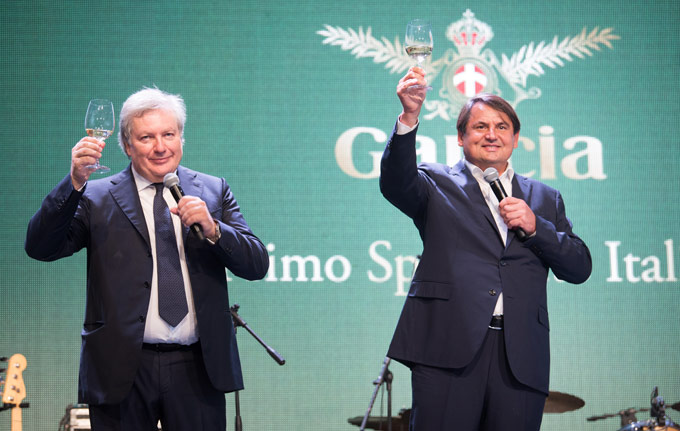
The company was founded in 2002, though its roots are very ancient.
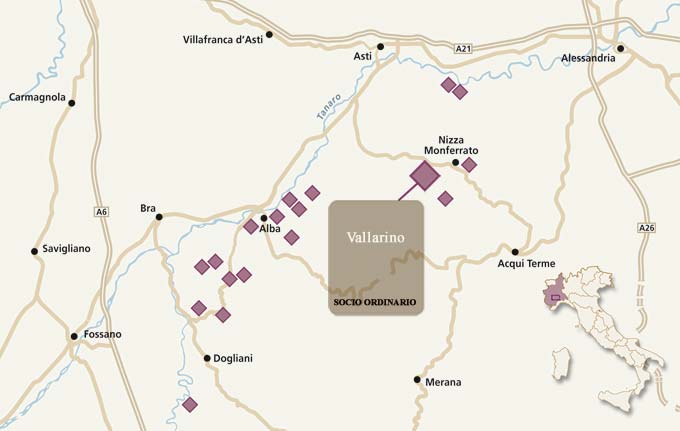
Carlo Gancia, historical pioneer of Italian sparkling wine, founded the company Fratelli Gancia in 1850; he was born in Narzole and had deep links with the world of Monferrato and Langhe wines. As a matter of fact, his family had always owned some vineyards in the Langhe area, they also gave the name Gancia to a little village in the district of La Morra.
In the first half of the last century Camillo Gancia bought the Mirafiore winery, located in Santa Vittoria d’Alba, from Count Gastone di Mirafiori, nephew of King Victor Emmanuel II of Italy.
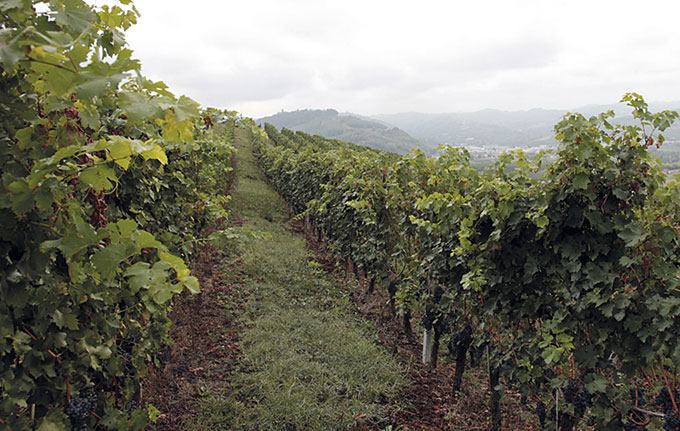
So the Gancia group basically went back to their roots by creating Tenute dei Vallarino, which is an agricultural company that established close relations with its own territory through the production of great Piedmont wines. The two objectives that drove the investment were on the one hand the compliance with the company’s strict quality requirements and, on the other hand, the enhancement of the region’s native vines. This desire was also reiterated by participating in the study project for the enhancement of a particular vine, the Albarossa, obtained from the crossing of Barbera and Nebbiolo.
Tenute dei Vallarino predominantly cultivates red native grapes like Barbera and Nebbiolo, but there are also international varieties, for example Cabernet Sauvignon, Merlot and Syrah.
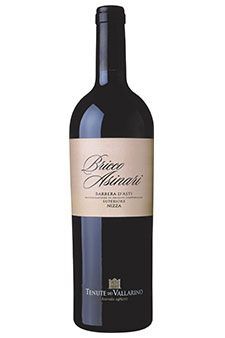
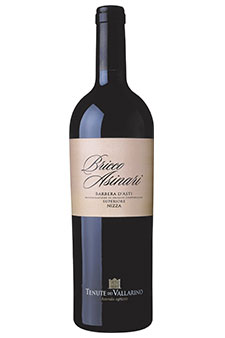
The company also produced two interesting white wines: one is dry, obtained from an almost unknown variety of grapes, the Bussanello, while the other, a Moscato d’Asti, is aromatic. The most ambitious and most important wine, though, is the Barbera d’Asti Doc Superiore “Nizza” Bricco Asinari: this is a red wine with great body and structure, particularly elegant and balanced; from this wine the company has taken the greatest satisfaction.

Tenute Guicciardini Strozzi
Tenute Guicciardini Strozzi
Biography
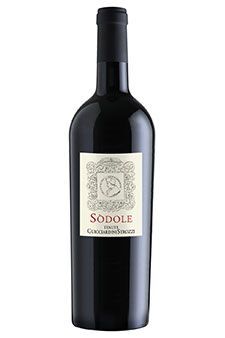
The business boasts over 1000 years of activity, with the earliest testimony to Cusona’s existence dating back to 994 AD. The Cusona estate spreads over 530 hectares and is situated amongst the green Tuscan hills, close to the medieval town of San Gimignano (known as the medieval Manhattan). Throughout the centuries, the political and economic weight of the Strozzi and Guicciardini families, with their illustrious figures, has influenced the history, not only of Tuscany, but also of Italy and Europe.Francesco Guicciardini,for whom Niccolo’ Machiavelli started his political career as secretary,became a prominent political figure, acting as Governor of the Papal States as well as being a philosopher and historian. The Strozzi were powerful bankers, heads of State and mercenary commanders. As direct rivals of the Medici, they were banned from Florence following the rise to power of Cosimo dei Medici. Nevertheless they increased their enormous wealth elsewhere, which enabled Fillippo Strozzi, once back from exile, to build the magnificent Palazzo Strozzi in Florence. Piero Strozzi was Marshal of France and commanding officer of the French troops. His bust is displayed in Gallery of Battles in Versailles. [During the XVII century the descendants of the Guicciardini Strozzi family were united in marriage in London to the Marlborough’s, the family of Sir Winston Churchill.Amongst the illustrious ancestors a special mention should be given to Lisa Gherardini del Giocondo, otherwise known as La Gioconda, painted by Leornado da Vinci. The current members of the family are the 15th generation of descendants of Monna Lisa.In 1850 the building of a cellar with underground galleries was starter under the leadership of Francesco Guicciardini, Mayor of Florence and Minister of Agriculture and Foreign Affairs and married to Luisa Strozzi.At that time Cusona became a prominent national example of avant-garde business.In the 70’s, Prince Girolamo Strozzi started selling the wine around the world, a business he still runs with his wife Irina and his two daughters Natalia and Irina Jr. In 1999 the wine production extended to other areas such as Maremma (Bolgheri, Scansano, Montemassi) and Pantelleria.The Guicciardini Strozzi winery produces 22 varieties of wines. Amongst the best known labels is the Vernaccia di San Gimignano, which was produced for the first time by the winery in 1200 and exalted by Dante, Michelangelo and Boccaccio. The Medici Court enjoyed the Vernaccia and also sent it to the Pope. Sparkling white wine (spumante) and grappa are also produced using the Vernaccia grapes. The historical red wine labels include Sodole, a 100% San Giovese and Millanni, produced to mark the 1000 year anniversary of the winery, made with a mix of San Giovese, Cabernet Sauvignon and Merlot.

Tramin
Tramin
Biography
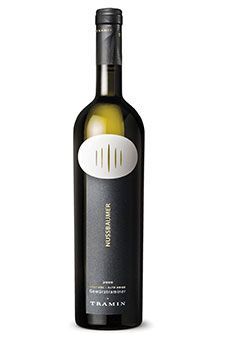
Termeno (Tramin in German) is a village in the lower Adige valley, a viticultural area to the south of the city of Bolzano which is famous as the home town of Gewürztraminer, a grape variety with a typical aroma frequently, and incorrectly, translated into Italian as “aromatic Tramin”: a more accurate translation would be “spicy Tramin” for the wine’s notable scent of cloves. Here the ancient Rhaetian people produced wine centuries before the Roman armies arrived and colonized the territory. In the days of the Austro-Hungarian Empire, in 1898, Christian Schrott, the parish priest of Tramin and a deputy in the Austrian Parliament, founded one of the first “Kellereigenossenshaft” (cooperative wineries) of the South Tyrol, the Austrian name for Italy’s Alto Adige region. Today, more than 110 years later, the Cantina Tramin has become a significant force in the economy of the region with more than 280 associates and 575 acres of vineyards under cultivation in the area around Termeno.
The production philosophy of the cooperative is to maintain, and give even greater luster, to the viticultural patrimony of the zone and to seek to preserve a harmonious and balanced relationship with the environment, to the point that many of the vineyards are cultivated according to the tenents of natural and biological agriculture. The product line is divided into a series of different quality levels. The more prestigious selections have been created to show off the high level of the various grape varieties and crus: the soft Schiava wines of the Freisinger vineyard, the fruity Pinot Grigio of Unterebener, the herbaceous Sauvignon of Stoan, the fragrant Pinot Blanc of Stoan, and the powerful Lagrein Dunkel of the lovely Urban vineyard. The speciality of Cantina Tramin is unquestionably Gewürztraminer, produced in a variety of different versions which express both the special aromatic characteristics of the grape and the specific vineyard source. The Gewürztraminer Roan is a late-harvest wine which is then aged in oak, an intense straw yellow in color, very fruity on the nose with notes of both citrus and tropical fruit mingled with spice and honey. Nussbaumer is a sort of grand cru of Termeno, one of the township’s oldest Gewürztraminer vineyards, long considered one of the finest spots of all for the cultivation of the grape. The wine has very intense aromas of both fresh and ripe fruit, spice, and dried roses; on the palate its flavors are of a rare intensity and purity, exceptional in their length and aromatic persistence. At the top of the quality pyramid is the Gewürztraminer Terminum, a wine of absolute stature and excellence, extraordinary in its aromatic concentration, potent and enveloping in its fused and balanced notes of fruit and spices, sweet and characterful in flavor and impeccably suave.

Valle dell’Acate
Valle dell’Acate
Biography
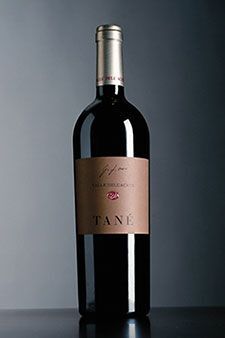
Valle dell’Acate is one of the more enterprising houses in the southeast Sicilian oenological panorama. It is situated in the Bidini area, in the hills of the Drillo valley in the famous triangle of territory between Acate, Comiso, and Vittoria. The house was founded by an initiative of the Jacono family, constantly active in the field of viticulture and wine ever since Vittoria was at the most dynamic center of exportation of wine for the French market at the end of the 19th century. Today the house is run by Gaetana Jacono, the sixth generation of the family. With the same passion which linked her ancestors to the vine and with evident entrepreneurial abilities, Gaetana Jacono has dedicated her work to the DOC and IGT wines of Sicily. Wines which have enjoyed great success, and on international markets as well. The property extends over 250 acres and a large part, since 2001, has been replanted with the principal grapes of the zone and with international varieties as well. Here the soil, locally know as “Milaro”, is characterized by a special sub-soil of calcareous sandstone interspersed with pockets of clay, a fine soil for quality wine. The advantages of the area, along with the utilization of advanced cellar equipment, allows Valle dell’Acate to produce a range of high level wines. The Insolia is an interesting wine, floral and citric, and Bitis, a blend of Chardonnay and Insolia, has a generous bouquet of citrus fruit, tropical fruit, and vanilla. The Cerasuolo di Vittoria has an important personality; a blend of Nero d’Avola (60%) and Frappato (40%), an intense ruby red, it is redolent of berry fruit, particularly blackberries and raspberries, liquorice, and chocolate. On the palate it is soft and velvety. It goes very well with red meat, roasts, and game stews. Frappato is intriguing, an aperitif wine with a fragrance of raspberries, as is Moro, 100% Nero d’Avola, with aromas of blueberries, ample and very warm and ideal with game. Very full the last wine to be created, Tané, a blend of Nero d’Avola and Syrah. Very complex, an impenetrable and dense ruby red, it is full and ample in aroma with notes of berry fruit, spices, vanilla and chocolate. Rich and structured, it is full in flavor, concentrated, supple, with a berry fruit finish. It is a fine match with cheese such as the Ragusano (a DOP product), the provola of Nebrodi, and pecorino, or with red meat and game.

Velenosi
Velenosi
Biography
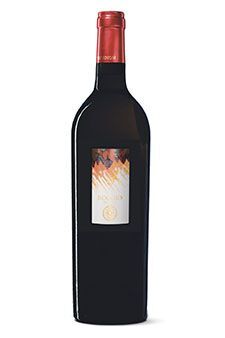
The Velenosi firm was founded in 1984 with a decision of two young entrepreneurs, Angela Piotti Velenosi and Ercole Velenosi. In 2005 a new partner appeared, Paolo Garbini, and a new company was formed. Although active for only a few decades, the firm, aided by the passion and commitment of the proprietors and the work of a great consulting winemaker, Attilio Pagli, has reached true excellence in the quality of its wines. The factors of the success: modern production techniques, perfectly equipped cellars, meticulous and dedicated work in the vineyards, avant-garde technology. The wines which first made the reputation of the house were two white crus. Reve di Villa Angela, a Chardonnay, a golden yellow with a nose of tropical fruit and an elegant, well structured palate, and the Villa Angela Marche Chardonnay. The firm has also invested in red wine, comforted by much faith in the potential of the territory and in one of it grape varieties, Montepulciano. A variety which is commanding the attention of discerning consumers all over the world as one of Italy’s major grapes. In the Rosso Piceno DOC and the Rosso Piceno Superiore of the house, Velenosi uses Montepulciano with Sangiovese and small quantities of other authorized or recommended red grapes. In Ludi, the most important red wine of the house and winner of many prizes, Montepulciano is blended with Cabernet Sauvignon and Merlot, planted in new vineyards with modern criteria, denser and with tighter spacing. New casks of various dimensions (barriques, tonneaux) are used for the fermentation and aging of the wine; an aging period which, in order to obtain maximum results, lasts for at least two years . The result, after a further period of bottle aging, is an important wine, of excellent concentration. An intense ruby red, Ludi has penetrating and persistent aromas of fruit, particularly cherries and blackberries, notes of graphite and liquorice, and balsamic notes of rosemary and thyme. On the palate it is austere and elegant, strong in its impact and with an important impetus, solid and decisive with elegant tannins, soft and supple. Among the house wines there are also the sparkling offerings which include a classic Spumante Brut from Chardonnay and Pinot Noir grapes, a wine for the entire meal.