
Marchesi Frescobaldi
Marchesi Frescobaldi
Biography
The Frescobaldi name goes back 700 years in the world of wine and, by now, has involved 30 generations of the family. In the 1960’s, Vittorio Frescobaldi, proprietor of the house along with his brothers and sisters, Dino, Maria, Ferdinando, and Leonardo, gave a modern organization to this tradition, creating a firm headquartered in Florence with nine estates in Tuscany and another in Friuli. There are some 2250 acres of vineyards in zones with very different soils and climates, source of the seven million high-level bottles produced annually. It is not easy to fully explain a complex reality such as this to customers, connoisseurs, and journalists. The Frescobaldi have succeeded by showing, in a large room, the significant elements of the major estates, proposing to visitors a virtual trip through this bio-diversity employing all five senses: aroma and taste, first and foremost, by tasting the most important wines along with the gastronomical specialities of their zones and identifying, one by one, fragrances and essences which the estate oenologist presents.
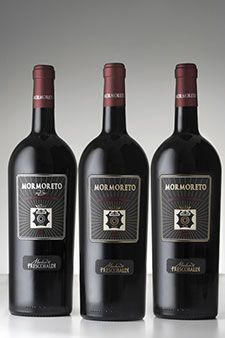
It is a kind of game which also involve sight, touch, and even sound, with carefully chosen music as accompaniment as well. An original way to get to know the historic Frescobaldi properties: Castello di Pomino, the Castiglioni estate, Castello di Nipozzano. And more recent acquisitions as well: Castelgiocondo in Montalcino, Santa Maria in the Tuscan Maremma, Luce della Vite, originally a joint-venture with the Mondavi family of Napa Valley in California, now entirely owned by Frescobaldi, and finally the Attems estate in the Collio hills of eastern Friuli. It is from the crus of Nipozzano that Montesodi and Mormoreto are made, while Lamaione comes from Castelgiocondo: the Super Tuscans which have given the greatest satisfaction to the family.

Marco Felluga
Marco Felluga
Biography
Brother of Livio Felluga, Marco Felluga belongs to the same dynasty of producers of wine. With a childhood at Grado and oenological studies at the school of Conegliano, it was inevitable that he should fall in love with the nearby Collio hills, where a magical landscape is one with a climate and soil with important potential for fine wine. From the lagoon of Grado to the hills of Gradisca d’Isonzo, therefore, it was only a short step for Felluga, who founded his own cellar at the latter spot.
The balance between modern innovation and modern technology on the one hand, and the traditions of the zone on the other, have made the house a reference point for the entire territory. It is no accident that the local producers consortium has been guided by Felluga in recent years. Today, to follow in the footsteps and in the philosophy of absolute quality is his son Roberto, the fifth generation of the family. Vineyards amount to 300 acres and production to 600,000 bottles annually, and two wines top the quality pyramid: Carantan, a red, and Molamatta, a white. They make Marco Felluga a widely respected firm, but only the leader of a group with three other estates. The most important is Russiz Superiore, 240 total acres and 175 planted to vines, a place imbued with the history of Friuli whose owners, in the 13th century, were the Torre e Tasso princes.
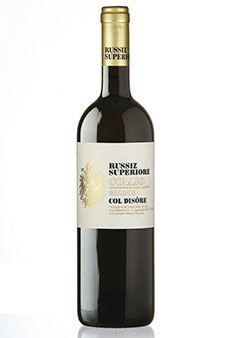
Acquired in 1966 at Capriva di Friuli, its annual production is 200,000 bottles and its leading labels are the white Col Disôre and the red Riserva degli Orzoni.
The Castello di Buttrio estate, instead, was purchased in 1994 and is endowed with a rich patrimony of vineyards planted with selections of native grapes from the old vineyards of the property. Two wines are produced: the white Castello di Buttrio-Ovestein and the red Castello di Buttrio-Marburg. The last property to become part of the group consists of 125 acres of vineyards at San Casciano Val di Pesa, near Florence in Tuscany. This estate, San Nicolò a Pisignano, produces a Sangiovese-based cru, Sorripa.

Planeta
Planeta
Biography
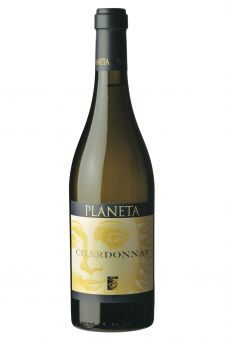
The Planeta family has been working with passion and commitment in various agricultural activities in the province of Agrigento for several generations and have been forerunners in many developments in Sicilian agriculture. Since 1995, the year of the first vintage in the Ulmo cellars, Planeta has expanded into other areas of the island, seeking out specific areas with different soils and micro-climates that would enable the house to produce wines with special character and personality. In order to realize this ambitious goal, the firm has made major efforts on behalf of Sicily’s native grapes, has sought out the finest international varieties which might adapt themselves to the specific conditions of the island, and has attempted to bring back to active life some of the oldest and most fascinating viticultural areas of Sicily. The overall Planeta project currently involves four different areas: Sambuca di Sicilia and Menfi in the province of Agrigento, Noto in the province of Siracusa, and Vittoria near Ragusa, gathering together in this way zones with greatly different oenological traditions but united by the fact that each produces high quality wines of true individual character. The newest estate of Planeta, instead, is located at north-northeastern slopes of Mount Etna in the Santo Spirito district, close to 3000 feet above sea level.
The gamut of house crus ranges from the Sicilian tradition, exemplified by Santa Cecilia, a Nero d’Avola from Noto, to international-style wines such as Burdese, a blend of Cabernet Sauvignon and Cabernet Franc, a Chardonnay and a Merlot, all particularly popular both with wine guides and consumers.
The latter two have won a popularity which can be defined, without exaggeration, as planetary: the Chardonnay can be considered, beyond the shadow of a doubt, a cult wine not only in Italy but also in foreign markets, a success which can be explained by the exceptional pleasure it gives, its golden yellow color with green highlights, and a nose and palate which join freshness and opulence to a mineral character.
The Merlot, instead, is a red wine whose aromas are characterized by notes of red currants, ripe plums, and candied violets together with balsamic sensations of lemon and sage. Ample and velvety, it is, at the same time, powerful and supple, sweetned by its significant alcohol level and freshened by a light touch of acidity.
The three younger Planeta members who direct operations at the house under the supervision of the patriarch Diego: Alessio, Francesca, and Santi.

San Felice
San Felice
Biography
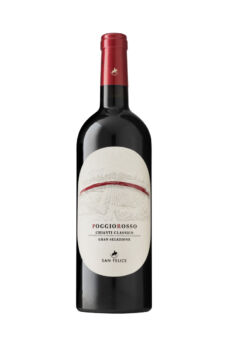
The territory came under the ownership of the ancient church of San Felice in Avane, point of contention among the bishops of Arezzo and Siena since 714. Since the 19th century, San Felice was owned by the marquises of Taja, who were among the founders of Consorzio del Chianti Classico in 1924. The company suffered the post-war crisis due to the depopulation of the countryside: it was sold by the Grisaldi del Taja in 1968 to an important financial group and then to RAS, today Allianz: thus begins the development of the company devoted to a quality production.
San Felice is located in the town of Castelnuovo Berardenga, a few kilometers from Siena, in the heart of Chianti Classico. The small medieval village and the modern cellar are surrounded by 140 hectares of vineyards, most of them planted in Sangiovese, thus witnessing San Felice’s commitment to the production of Chianti Classico, such as Riserva ‘ Il Grigio’ and Gran Selezione ‘Poggio Rosso’.
But at the same time San Felice has distinguished himself to be a very innovative producer committed to research. This is shown by the historic ‘Vigorello’, precursor of Supertuscans and ‘Pugnitello’, from the homonymous ancient Tuscan grape, being the result of rediscovery and long experimentation conducted with the support of University of Florence.
In 1990, an important renovation project for the village of San Felice was carried out, with the creation of an elegant hotel, member of the prestigious “Relais & Chateaux” chain, which for several years has been classified by ‘Traveller’ magazine among the best Resorts in Europe .

Tasca d’Almerita
Tasca d’Almerita
Biography
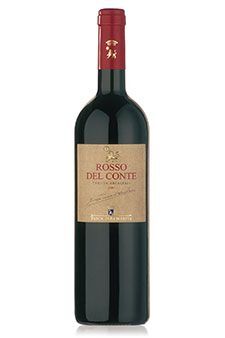
The estate was created in 1830 when brothers Lucio and Carmelo Mastrogiovanni Tasca purchased the former fiefdom of Regaleali, approximately 3,000 acres of land at Sclafani, near the border between the provinces of Palermo and Caltanissetta. It was directed in those first years by Lucio, who made it into a model estate. Regaleali has never ceased to be in the vanguard of Sicilian viticulture in its subsequent 120 years of activity when, at the end of the Second World War, the agrarian reform led to the confiscation of over a half of the original 3,000 acres, reducing the property to 1,250 acres: Count Giuseppe Tasca d’Almerita had the foresight to react vigorously and with real determination, giving wine and the vineyards a central place in operations and aiming exclusively at high quality. He was a pioneer in the cultivation with wire-trained vines, in reducing yields per hectare, and in the utilization of such native Sicilian grapes as Inzolia and Nero d’Avola. Also in experimenting, without any sense of prejudice, such international grapes as Chardonnay and Cabernet Sauvignon. Current operations are in charge of Count Lucio Tasca d’Almerita and his sons Giuseppe and Alberto: theirs was the decision to create a company, composed almost entirely of young Sicilians, which directs all of the strategic areas of production, from the budgetary matters to marketing, and sells the wine all over the world. From the heart of Sicily, from that ecological oasis which is called Regaleali, issue forth each year three million bottles of wine: four white wines, six red wines, two sparkling wines, and a dessert wine, all produced from authentic crus. Two were created by Giuseppe Tasca d’Almerita, father of Lucio: the Rosso del Conte, a Nero d’Avola perfected long before this grape variety became popular, aged in chestnut casks (which now have been replaced with oak), and Nozze d’Oro, a white wine realized to celebrate the 50th anniversary of his marriage to Baroness Franca Camarata. Among the white wines, the fleshy, elegant Chardonnay merits much attention, as does the aristocratic Cabernet Sauvignon among the reds. Increasing popular as well is the aromatic sweet wine Diamante d’Almerita, a blend of Moscato and Traminer.

Tenuta San Leonardo
Tenuta San Leonardo
Biography
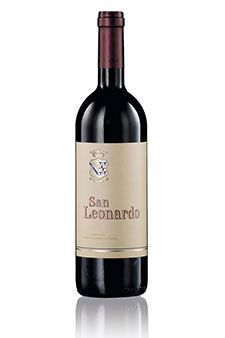
The first evidence of the existence of the Tenuta San Leonardo is from the fifth century A.D. when is recounted that Autari, king of the Lombards, had married Teodolina, daughter of the king of Bavaria. In the maps of the 10th century A.D. San Leonardo is already recognizable. It was at that time that monks arrived, established a small convent and began to cultivate the vine.
After many centuries as church property, the estate was sold to the Gresti family in the 18th century, and came into the hands of the Guerrier Gonzaga marquises by female descent in the 19th century.
San Leonardo is in the town of Borghetto all’Adige, one of the first townships of the lower Trentino in the Adige river valley near the Veneto. Carlo Guerrieri Gonzaga became the director of the property after his father, Anselmo Guerrieri Gonzaga, and he is now assisted by his son, who bears the same name as his grandfather. The estate has always sought to achieve the highest possible quality, true, concrete, and perceptible. The means to achieve the goal are a rational viticulture which achieves the maximum with the various vineyard plots and grape varieties, and cellar practices which are, at the same time, rational and natural. The sole goal is to conserve and maximize the quality potential present in the grapes when they are harvested. Over the course of time, the vineyards have been periodically renewed and replanted in order to have, at all times, a certain number of old vines capable of producing fine wine (the young vines are utilized for wines which are immediately pleasurable, just as in Bordeaux). The symbol of the estate is San Leonardo, a well studied blend of Cabernet Sauvignon, Cabernet Franc, and Merlot; after a lengthy period of skin contact, the wine is run off its skins and aged for at least two years in French oak barrels, then aged a further two years after bottling before release. An elegant wine, rich, supple, sumptuous, which has nothing to envy in comparison to the grand crus of Bordeuax. The “second wine” of the house is Villa Gresti, a Merlot with a small percentage of Carmenère, a wine of striking finesse, soft tannins, and roundness on the palate.

Tenute di Ambrogio e Giovanni Folonari
Tenute di Ambrogio e Giovanni Folonari
Biography
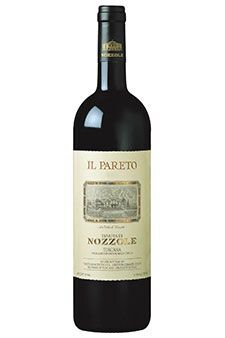
The Tenute Ambrogio and Giovanni Folonari was born from the scission in the Ruffino winery when, in the year 2000, Ambrogio Folonari and his son Giovanni, decided to concentrate on high level wine, creating a collection of well located viticultural properties, particularly in Tuscany, which produce fine wine. The Folonari family has operated in the sector of wine since the 18th century and has contributed, over the years, to the writing of important chapters in the history of Italian, particularly Tuscan, wine. The purchase of Ruffino by the grandfather of Ambrogio Folonari, Italo Folonari, goes back to 1912; though originally from Brescia, the Folonari thus began a century of entrepreneurial activity on Tuscan soil. The current operation owns Nozzole, acquired in 1971, and Cabreo, both in Greve in Chianti, Torcalvano at Montepulciano, La Fuga in Montalcino, and other properties as well: Ronco dei Folo in the Colli Orientali del Friuli appellation, Campo al Mare in Bolgheri, Tenuta Conti Spalletti at Rufina, and the Tenuta Vigne a Porrona in the promising Montecucco DOC. The labels bear the trademark of the single estates which supply the grapes for the wines, a guarantee of the origin of the various offerings. Creativity, innovation, and a precise respect for the traditions of the various territories are the core principles of the company’s work in directing these very different properties. The two wines with the greatest tradition are unquestionably Pareto di Nozzole and Cabreo il Borgo: the former is a sumptuous Cabernet of great complexity and elegance, the second a blend of Sangiovese and Cabernet, one of the original Super Tuscan wines. Pareto, produced with a lengthy 16-18 month aging in small oak barrels and a further six month period of bottle aging, austere and concentrated but, at the same time, suave and supple, is an ideal match for the great dishes of the Tuscan kitchen, roasts and game. Cabreo, instead, is a noble synthesis of the typical elegance of the most rigorously selected clones of Chianti Classico Sangiovese, and the power of Cabernet Sauvignon which, at the Zano estate near Greve in Chianti, expresses its varietal character at maximum levels.

Umani Ronchi
Umani Ronchi
Biography
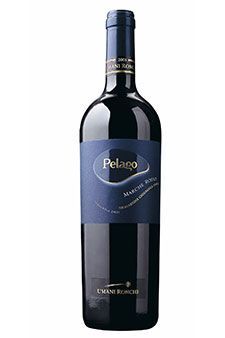
On an international scale, it is not a large winery, but by Italian standard sit Umani Ronchi of Osimo, with 500 acres of proprietary vineyards, 75 under lease, and an annual production of four million bottles, is of industrial dimensions. Industrial wineries normally do not produce fine wine, but this winery in the Marches has succeeded, and for a certain period of time, in overturning this image. How has it been accomplished? With constant high quality and at least three thoroughbred wines. One is Plinio, a Verdicchio dei Castelli di Jesi as full-bodied as its name suggests, the second, Cumaro, a Rosso Conero Riserva which is supple, harmonious, and balanced, but the third is Pelago, an unusual blend of Cabernet Sauvignon, Montepulciano, and Merlot, powerful and elegant and rather unexpected in an area known for its Verdicchio-based wines. The anomaly of Umani Ronchi is that it enjoys all of the advantages of scale of an industrial winery without succumbing to the temptation of reasoning strictly in terms of numbers, perhaps because it is still a family winery: the director of production, until now, has been Massimo Bernetti, who currently shares the tiller of command with his son Michele, sales director and responsible for foreign markets, while his uncle Stefano is in charge of the Italian market. Why does the house not bear their name? Simple: it was founded in the 1950’s at Cupramontana by Gino Umani Ronchi. But it took off only when, a few years later, the company was joined by engineer Roberto Bianchi who, in 1970, purchased total control and then passed it on to son-in-law Massimo Bernetti after moving the winery to Osimo, where it is currently headquartered. Success, according to the Bernetti, is due to three decisions: diversification in a region where mono-product firms are the rule; exports, which absorb 80% of the total production; quality, i.e. rigorous selection of the grapes, low yields per hectare, continuous controls in the laboratory, but above all constant research in the vineyards and cellar. To select clones, varieties, and training systems the Bernetti have an experimental vineyard at Villa Bianchi, the center at Moie di Maiolati where they receive guests, created by agreements with the environmental and agricultural Biotechnology Department of the University of Ancona.