
Allegrini
Allegrini
Biography
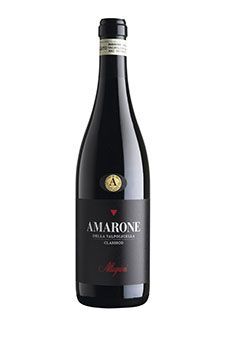
The Allegrini family has had a central role in the agriculture of the Valpolicella for many generations. A document from the year 1557 demonstrates that a certain Allegrino Allegrini had obtained the right to utilize the water of certain “fountains”, or underground springs, in Mazzurega, a part of the township of Fumane, in order to irrigate his lands, an indication that the family was already present in the area in the 16th century. And already in a pre-eminent position given that various legal acts and transcriptions between 1616 and 1630 show the Allegrini to be among the major landed proprietors of the zone. The head of the current generation, Giovanni Allegrini, therefore inherited an important agricultural tradition, but he was able to reinvigorate this tradition, becoming one of the fathers of the oenological history of his area. After the Second World War he was among the first to question the traditional viticultural practices of the Valpolicella, fearlessly overturning settled habits and customs in order to aim for high quality wines. He knew his way around the cellars as well: his father had began training him in the secrets of fermentating and aging of wine when he was twelve years old, and he had begun to learn at an early age.They called him “the spider of the casks”, because, when entertaining clients and offering them wine to taste, he leapt from large barrel to another in order to draw out one sample after another. Intelligence and passion allowed him to produce, in the 1960’s and 1970’s, some of the finest wines of his zone. His final project, which he did not live to see completely realized, was to replant the vineyard of the most famous and prestigious property of the Valpolicella, the Grola, a hill which had been abandoned in the early 1900’s: he brought it back to active and productive life and made it possible to cultivate it with the tractors which were newly available. His children followed him in his work: initially the first-born, Walter, who died prematurely in 2003, then his daughter Marilisa and son Franco, in charge, respectively, of marketing and winemaking. The vineyards are all in the classic part of the Valpolicella appellation: 175 acres which belong to the family and another 50 which are leased. With an annual production of 900,000 bottles, the estate has had an important role in establishing the concept of the cru, of vineyards with superior quality potential: two important expressions of the concept are La Grola and Palazzo della Torre, true and outstanding ambassadors of the territory in the markets of the world. An equally prestigious part of the line are the innovative Amarone and La Poja, a 100% Corvina wine from the grapes of a single vineyard which expresses all of the character of the variety. The Allegrini have succeeded in creating four aces to put on the table.

Antinori
Antinori
Biography
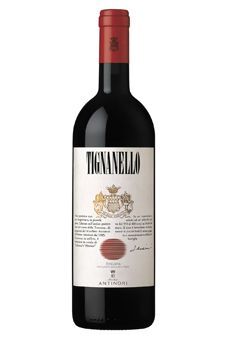
The Antinori family is closely identified with the city of Florence, to which it moved, from nearby Calenzano, in the early 13th century, first working in the field of silk production and then moving to the commerce of wine. Giovanni di Piero Antinori, in fact, joined the Vintners Guild of Florence in 1385. The family has been a protagonist in the world of Tuscan wine for 26 generations with a series of initiatives which were truly avant-garde at their time: in 1898, with the foundation of the Fattoria dei Marchesi Lodovico and Piero Antinori, a modern and organized firm had already been created. Over the last 30 years, the company guided by Marquis Piero Antinori, has become, in terms of overall business volume, the most important private group in Italy with a production of some 18 million bottles. Though closely identified with Tuscany, the Marchesi Antinori firm also owns estates in other regions, first and foremost in Umbria, owns some 3500 total acres of vineyards, and has invested in many other viticultural areas of the world, from Hungary to California and Chile. The most significant feature of the Antinori wines is their overall high quality, even in the lower-priced wines. Piero Antinori became the leader in the Renaissance of Italian wine with the creation of Tignanello, the first Super Tuscan, produced form the blending of Sangiovese and Cabernet and aged in small oak barrels. There are many jewels in the family collection created under the guidance of Piero Antinori: Solaia, born in Chianti Classico just like Tignanello; Guado al Tasso, produced at Bolgheri on the Tuscan coast; Pian delle Vigne, a Brunello di Montalcino; Cervaro della Sala, produced, along with Muffato della Sala, a prototypical dessert wine with pourriture noble (noble rot), near Orvieto in Umbria. The future guidance of the firm will be entirely in feminine hands: Piero Antinori, in fact, has three daughters, Albiera, Allegra, and Alessia. Theirs will be a new way to be in pace with their times.

Argiolas
Argiolas
Biography
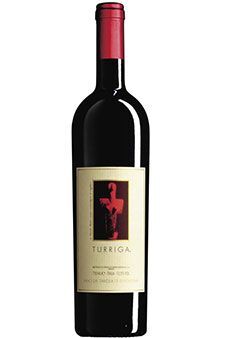
The choice of the name Argiolas for the winery and the firm was by no means a random one: this has always been a family-run operation ever since its foundation at Serdiana near Cagliari by Francesco Argiolas in the early years of the 20th century. Oral tradition has it that a certain number of vineyards were planted during the First World War by Polish and Austrian prisoners of war. The firm was given a legal structure and entrepreneurial dynamism in 1938 by Antonio Argiolas, son of Francesco, quite active in extending the marketing of wines such as Monica, Nuragus, and Cannonau, previously confined to Sardinia, first to Tuscany, Latium, and the Veneto and then to France and Germany. Wines of good quality, but sold in bulk, not in bottle, as was the case of almost all of Sardinia’s wine at the time, though these were often anonymous in terms of character and personality as well. And during the deep commercial crisis which bulk wine went through in the 1980’s, many cultivators on the island accepted EEC contributions to uproot their vineyards and cease activity altogether. Antonio Argiolas, convinced that quality sooner or later would reveal itself to be a winning choice, refused this solution to the problem, even though it would have been an extremely lucrative one for him, significant capital easily gained. The decisive move came with the arrival of his sons, Franco and Giuseppe, who took over operations in 1989 and transformed production into bottled, not bulk, wine. A decisive event was the collaboration with consulting winemaker Giacomo Tachis, the father of modern Italian oenology, who has inspired the work of house enologist Mariano Murru, his pupil. It was with the assistance of Tachis that the Argiolas brothers transformed their vineyards and experimented new methods in the cellar, the first steps on a journey which has witnessed the success of these wines in all of the markets of the world. If success can be measured with figures, those of Argiolas are imposing ones: 575 acres of vineyards in four different locations, Serdiana, Selegas, Siurgus Donigala, and Porto Pino, ten different wines in the line, and an annual production of some two million bottles: wines which have made the name of Sardinia in the world. The top wine, Turriga, an IGT Isola dei Nuraghi, is a rich blend of various local varieties, Cannonau, Carignano, Bovale Sardo, and Malvasia Nera and has entered into the exclusive club of the internationally famous. Equally important for the name of the firm have been the dry white wine Is Argiolas, a Vermentino of depth and dimension, and the sweet Angialis, a blend in which a small percentage of Malvasia amplifies and further enriches the aromas of Sardinia’s Nasco.

Arnaldo Caprai
Arnaldo Caprai
Biography
The firm was born in 1971 when Arnaldo Caprai, a textile entrepreneur with a small industrial empire at Serrafoligno, purchased an agricultural property in nearby Montefalco, Val di Maggio. The property practiced a mixed agriculture, but also had six or seven acres of vineyards. An unusually gifted businessman, Arnaldo Caprai always gave the maximum attention not only to volume and profits, but also to the cultural aspects of his activities: over the years he had put together Italy’s largest collection of embroidery, lace, old handkerchiefs, and fans which he used to organize exhibitions of great interest. He had acquired the vineyards of Val di Maggio with the same spirit: Montefalco is the home of an old grape variety, Sagrantino, a grape which, since the Middle Ages, had always given wines of great intensity and noble structure. The small vineyard which he had purchased was located in the heart of the most promising part of the zone: Torre. But, at the time, Sagrantino was a virtually unknown wine outside of Umbria; it needed a quality producer who was also capable of given it a certain image and fame.
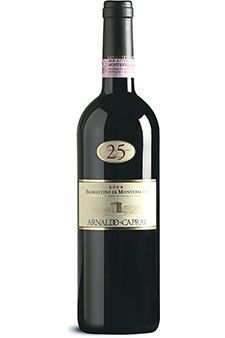
Caprai had this ambition, but needed someone to put it into practice. He found the professional figure he needed in his son Marco, to whom the fortunes of the estate were entrusted in 1988. Rarely has the passage from generation to generation been so successful: the vital energy which Marco Caprai has given to Val di Maggio has surpassed every conceivable prevision. His was the decision, for example, to began a period of collaboration with agricultural faculty of the University of Milan, which has enabled him to create the greatest existing data bank on the Sagrantino grape. Working with passion and commitment, but with meditated choices as well, taken after consultation with major experts in every sector, the young, but tenacious, entrepreneur has not limited his work to the success of his own property but has created a new interest in the territory and its wines in all of the world’s major markets for wine. He has succeeded in creating the image of a wine linked to tradition, but realized with the most modern cellar technology available, powerful and structured but up-to-date and contemporary, round, supple, elegant, with velvety tannins. With 350 acres of vineyards, Caprai now produces 750,00 bottles of wine annually: the line consists of ten wines, but the pride of the firm is its Sagrantino. It excels, in particular, in the dry type, an important and long-lived red wine produced in two versions: Collepiano and the Riserva 25 Anni.

Barone Ricasoli
Barone Ricasoli
Biography
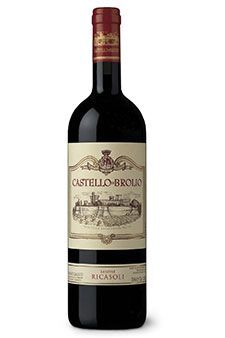
The Castello di Brolio is one of the symbol of Tuscany, virtually a sacred spot in Chianti Classico. Here, many years ago, Bettino Ricasoli, the “Iron Baron”, created and perfected the classic formula for Chianti Classico which laid the ground for one of the great and long-lasting international successes in the world of wine. The castle itself, situated in one of the loveliest, and wildest, spots in Tuscany, is surrounded by vineyards and woods. Over the course of centuries, it has had an eventful history. Some years ago, it was sold to an international corporation but, moved by pride in his family and its history, Francesco Ricasoli, the thirty second Baron of Brolio, decided to repurchase it for his family and restore it to the splendour of former times. With a grandiose effort of renewal of the vineyards, tens and tens of acres were replanted with rational, high density and low-yielding training systems. At the same time the cellars were modernized and amplified to hold the equipment, the casks, and the barrels where the wines of Brolio are given a lengthy period of aging. Ricasoli is one of those enlightened producers in Chianti Classico who continues to sustain the idea of château wine, i.e. by production strongly characterized by a property with a precise terroir, a concept modelled after Bordeaux but with a Tuscan accent and approach. For this reason, in addition to the Brolio Chianti Classico, the regular bottling, the wine which best embodies the personality of the estate and its territory is the Castello di Brolio, a wine which surprises with its ample aromas and flavors, but above all with its softness and elegance. The Riserva Rocca Guicciarda, a Chianti Classico, is a wine of great character, impressive in its concentration and richness of flavor. And Casalferro certainly deserves a special mention: a very successful blend of the native Sangiovese and international grape varieties, a wine which marries local and international flavors, a “glocal” wine, in short.

Bellavista
Bellavista
Biography
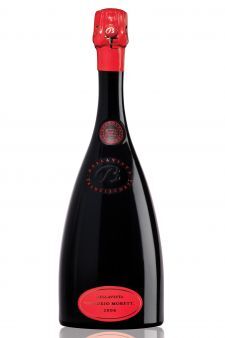
In 1975, when he began to purchase land and vineyards in Franciacorta in and around the town of Erbusco, Vittorio Moretti’s intentions were to construct a house for himself and his family, and not for nothing he purchased on the hill of Bellavista, so named for the spectacular view it enjoyed. He had another project in mind as well, however: that of producing bottles of fine wine to give to customers and suppliers at Christmas time. At the time he was simply an entrepreneur in the construction business, born in Florence, a resident for twenty years in Milan, a man who had decided to live in the countryside his family had originated from. Founder and director of an important business specializing in prefabricated units for the building industry, he had perhaps forgotten to have the blood of the countryside in his veins. But he soon realized, and soon changed his mind: in 1977 he created the Bellavista viticultural firm with the explicit objective of producing high-level sparkling wine capable of competing with fine Champagne. Today he can well say to have triumphed in his challenge: he owns close to 470 acres of vineyards which allow him to produce 1.1 million bottles in his ultra-modern and efficient cellars. But, what is more important, his has become an internationally important brand.
His success has been gained by putting together an important patrimony of resources, not only technical and viticultural, but human as well: since 1980 he has been assisted, first as a consultant and then as full-time oenologist, by Mattia Vezzola, a very talented winemaker. It is with him that he created and refined the range of wines which has allowed Bellavista to achieve exceptional quality levels. The regular Franciacorta, the Gran Cuvée Brut, dry and soft, the Pas Operé, very dry, the Satèn, delicate and lightly sparkling, and the Rosé, with its aromas of raspberries are all among Italy’s finest sparkling wines. And his non-sparkling wines are at the same level, above all the sumptuous Uccellanda and the concentrated Convento della Santissima Annunciata: both 100% Chardonnay, they enjoy a well deserved prestige. All begins with an almost obsessive attention to the raw materials: the grapes are hand picked, pressed and fermented separately, vineyard plot by vineyard plot in order to maintain the integrity of the individual character of each selection. To insure the maximum genuiness of the wines, Moretti, aided by Vezzola, has succeeded in realizing one of his dreams, eliminating, within the limits of what is possible, all chemical treatments in the vineyard and in the cellar. He produces, in short, biological wine, but without proclaiming it on his labels.

Bertani
Bertani
Biography
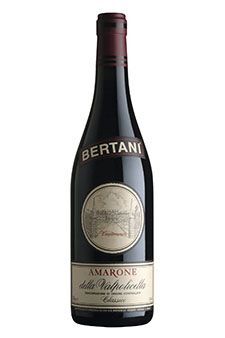
The Bertani firm was founded in 1857 at Quinto di Valpantena in the province of Verona by brothers Giovanbattista and Giovanni Bertani. Giovanbattista had the opportunity of meeting, in France, Jules Guyot, philosopher and scientist, the inventor of the world’s most widely used pruning system. It was an encounter of enormous importance, which inspired in Bertani a new understanding of the concept of terroir and drove him to adopt the most advanced production techniques of the time in order to maximize the character of his wine. The house gained its maximum glory in the years following World War II under the guidance of the second generation of the family, represented by Guglielmo Bertani and his brother, Giovanbattista junior. The brothers expanded their activity beyond the confines of the Valpantena to all of the major areas around Verona: to the northwest in the Bardolino zone, in the northeastern part of Soave Classico, where, in 1928, fermentation cellars were created in Monteforte d’Alpone, and in the classic portion of Valpolicella where, in 1957, the Novaia estate at Arbizzano di Negrar was purchased. This is the largest property of the territory with over 560 overall acres of land and some 150 acres of vineyards and with the Grezzana cellars, the heart and current headquarters of the house and one of the loveliest architectural monuments of the zone, an imposing villa erected in 1700 by Count Luigi Trezza. The firm, still property of the family, can currently boast of over 325 acres of vineyards in all of the major appellations of the province of Verona. The firm, however, is indissolubly linked to the name of Amarone: the pride of the house is the Amarone della Valpolicella Classico, an outstanding blend of Corvina, Rondinella, and Molinara and a part of the history of Italian oenology. The reknown of the wine is the result of its unusual character: the annual production of 80,000 bottles is the only Amarone to be marketed nine or ten years after the vintage and after a period of cask aging which lasts eight years. Unfortunately, in recent years it has gone on sale after a briefer aging period. But only because Bertani, a true exception in the zone, did not produce the wine in two vintages judged to be of inferior level, 1991 and 1992 and was forced to anticipate the release of subsequent vintages in order to hold its place on the market. Bertani makes only one type of Amarone. For what reason? The thesis of the firm is that a true Amarone della Valpolicella must be an expression of the entire territory, must be built on the three valleys which give wines of different character and personality, to be blended together into a cuvée which reassumes and reveals the complexity of the entire production zone.

Braida
Braida
Biography
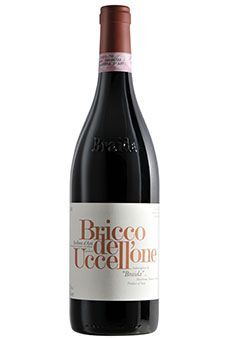
The history of the Braida firm is linked to one of the most extraordinary personalities of the world of Italian wine, Giacomo Bologna. Over 220 pounds of exuberance and sheer likeability, a man of overflowing humanity, almost to the point of caricature, ably concealed behind a mask of smiling irony, a force of nature. At 16 years of age, he had inherited, after the premature death of his father, a lovely vineyard in Rocchetta Tanaro and, along with it, the rights to its name, Braida. Thanks to this vineyard he had an unshakeable faith in Piedmont’s most popular and widely planted grape, Barbera, at the time consider a bit vulgar and plebeian. But the wine which he created with the variety, Bricco dell’Uccellone, was a horse of a different color. “A virtual copy of its patriarch Giacomo Bologna”, wrote journalist Burton Anderson, “this Barbera, aged in French barriques, takes its name from a vineyard above Rocchetta Tanaro to the east of Asti, the wine is almost excessive, powerful, warm, generous, full of fantasy and character and, in any case, completely convincing to the taste and certain to pass the test of time”. Giacomo Bologna had studied the creation of the wine after a trip to California and an encounter with André Tschelitscheff, the American oenologist of Russian origin considered the world’s greatest expert in the use of small oak barrels. Experiments had convinced him that even Barbera (which he called with the feminine article, as all true inhabitants of Piedmont do), poor in tannins but rich in acidity, could reach a new level of aristocratic elegance when aged in the barrels of French oak from the Massif Central, something that few were convinced of at the time. And he was entirely right: presented at Italy’s Vinitaly fair in 1985, the 1982 Bricco dell’Uccellone was a resounding success, thanks to which Barbera was able to enter, for the first time, the ranks of the world’s great wines. Just as his father, Giacomo Bologna died at too early an age, but his firm, Braida, has continued to enjoy great success. It is run by his two children, Beppe, a trained oenologist, and Raffaella, as exuberant as her father and with the same marketing talents in her DNA. In 1991 they decided to bottle a new Barbera which Giacomo Bologna had conceived and followed right up to the harvest which preceded his death. And they baptized it with the name which he had exclaimed after tasting the fermenting must: “we’ve got it”, “Ai Suma” in the dialect of Piedmont.

Ca’ del Bosco
Ca’ del Bosco
Biography
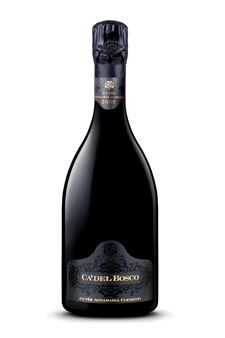
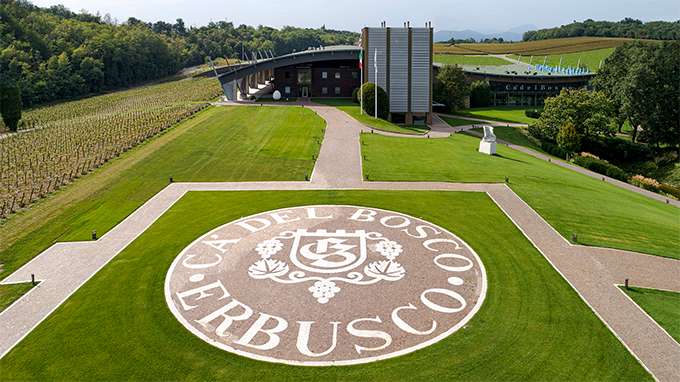
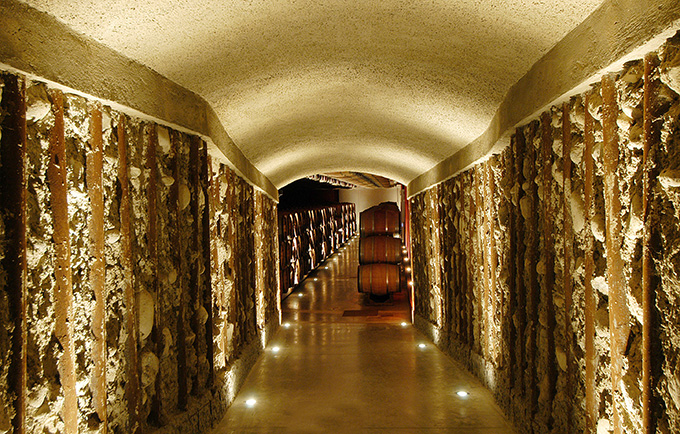
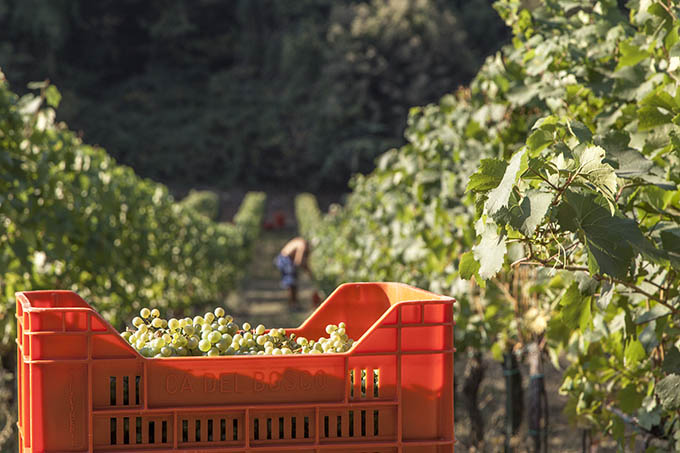
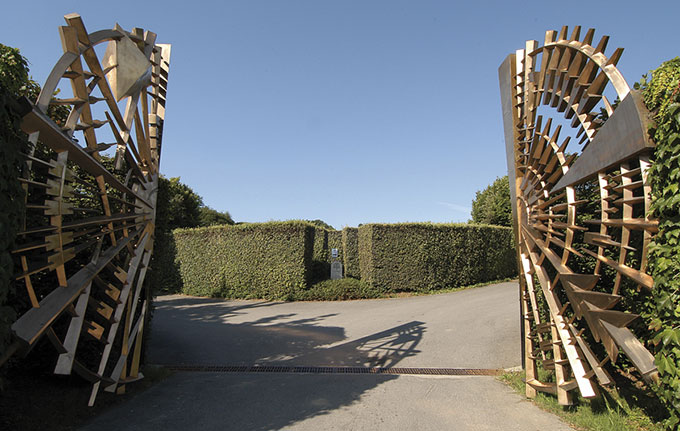
Ca’ del Bosco, a pioneering vintner and winemaker since the early 1970s, is one of today’s leading
producers of Franciacorta wines.
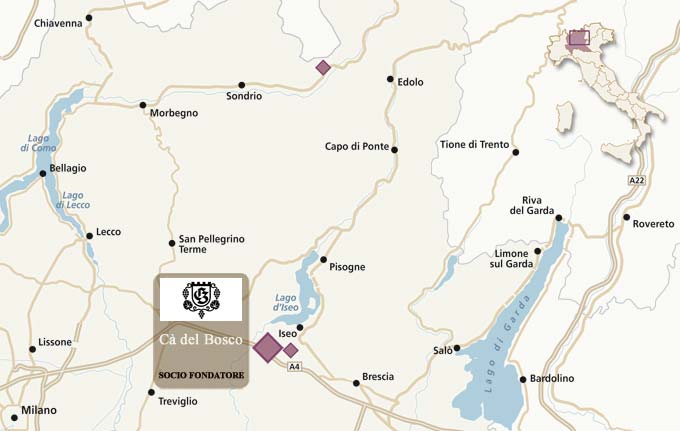
The fascinating story of Ca’ del Bosco goes back to the mid-sixties, when Annamaria Clementi
Zanella bought a small house on a hill in Erbusco, Franciacorta, locally called “ca’ del bosc”,
surrounded by a thick forest of chestnut trees.
In 1968, the idea of planting a vineyard took shape and Maurizio Zanella, Annamaria’s son and
current President of Ca’ del Bosco, became the protagonist of an avant-garde winemaking itinerary.
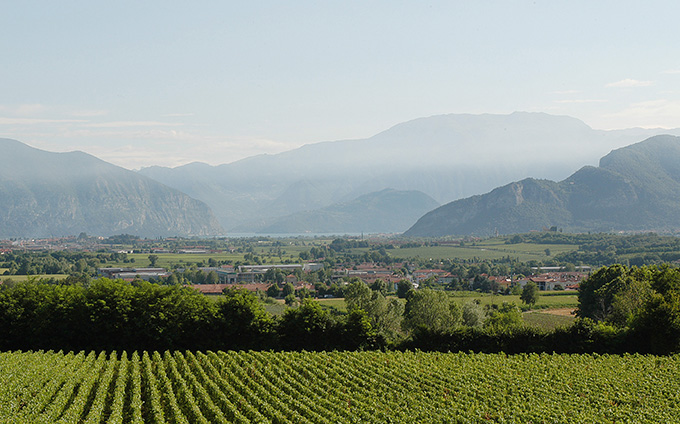
Ca’ del Bosco has given shape to the vocation of a wine-growing area – Franciacorta – as a region
that allows Chardonnay, in particular, to ripen fully to maximum aroma concentration.
Ca’ del Bosco’s winemaking practices enable a natural emergence of the typicity of the grapes
resulting from varietals and grape growing techniques. The company’s philosophy is based on use of
technology able to bring out the full flavor of the grapes and obtain the best possible wines. Each
batch of harvested grapes has a unique personality, which must be recognized and then guided
towards its complete expression.
The aim has always been to create a facility where the most advanced technology serves the noblest
traditions, one with its own elitist image and a significant role to play in the Italian wine industry.
At Ca’ del Bosco, one principle controls and defines the entire production process, from vinetending
to bottling: quality, or rather, only the top level of quality – excellence.

Castello di Albola
Castello di Albola
Biography
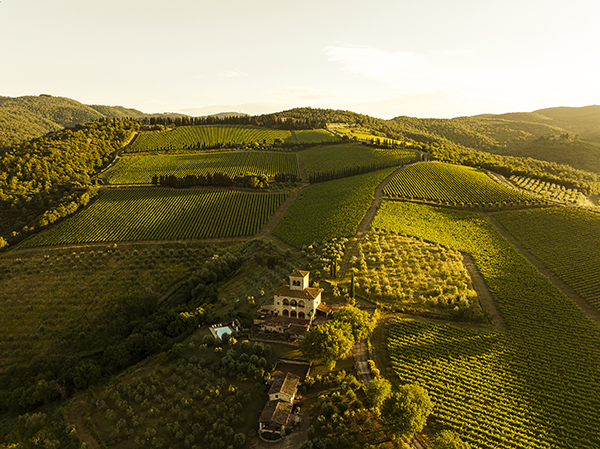
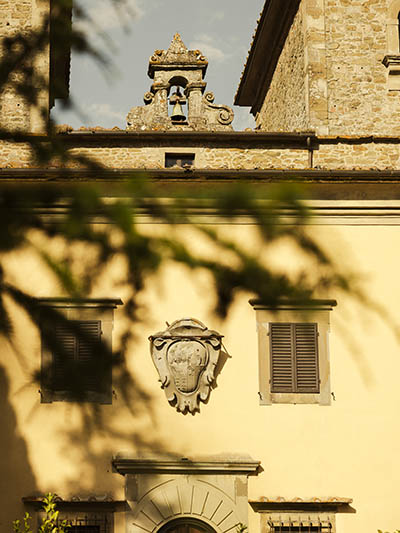
Nestled in the rolling hills of Radda in Chianti, Castello di Albola is a medieval village steeped in centuries of history, culture, and winemaking tradition. Since the 11th century, this land has been shaped by some of Tuscany’s most noble families, from the Acciaiuoli to the Samminiati, from the Pazzi to the Ginori Conti. In 1979, the estate became part of the Zonin Family, marking the beginning of a journey that blends deep respect for the past with an innovative vision for winemaking.
Today, Castello di Albola spans over 900 hectares, with 110 hectares of vineyards reaching altitudes of up to 650 meters above sea level. These unique conditions, combined with soils rich in alberese and galestro, contribute to the creation of elegant, long-lived wines known as Wines of Altitude. The pursuit of excellence goes hand in hand with a steadfast commitment to sustainability, with organic conversion initiated in 2016 and officially certified in 2022.
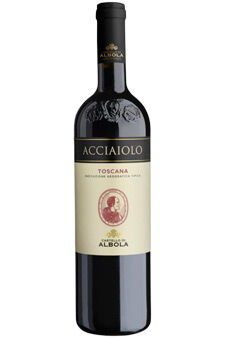
Among the estate’s outstanding wines, Acciaiolo stands out, a pure Cabernet Sauvignon that celebrates the connection between Castello di Albola and the historic Acciaiuoli family, whose legacy is deeply rooted in this land. This Supertuscan is the result of a meticulous selection of grapes from old vines, expressing remarkable elegance and depth. Its enveloping structure and captivating aromas make it a prestigious wine, offering a refined and modern interpretation of Chianti Classico.
.

Col d’Orcia
Col d’Orcia
Biography
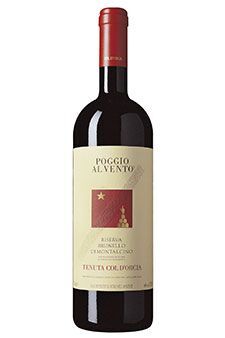
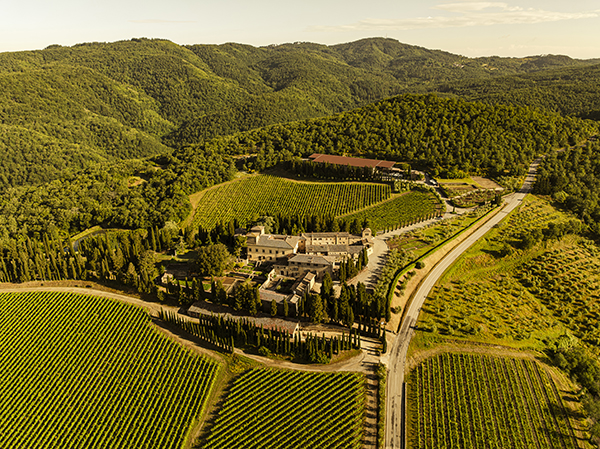
Col d’Orcia is one of the few properties in Montalcino which can call itself “historic”. Decades ago, in 1933, the estate was able to present three lengthily-aged Brunello wines at the first Italian wine fair held at Siena. Since 1973 it has belonged to the Piedmontese family headed by Count Francesco Marone Cinzano, assisted by Edoardo Virano, administrator and director.
The property, with 250 acres of vineyard surface, is on the southern slopes of Montalcino, the sunniest part of the appellation which lies between the hamlet of Sant’Angelo in Colle and the Orcia river. The vineyards have been almost entirely replanted in recent years with the assistance of the University of Florence in the clonal selection. The fermentation practices are traditional which modern research has confirmed to be ideal for the production of Brunello di Montalcino: lengthy periods of skin contact with the must, at least 25 days in order to favour the complete extraction of the polyphenols, and a long period of aging in small oak casks, three years for the regular bottling, four years for the Riserva selections. The Rosso di Montalcino and the regular Brunello di Montalcino are very interesting wines.
The crown jewel is the Brunello Poggio al Vento Riserva, made from the vineyard of same name planted in 1973, released only in the finest vintages, and a true milestone: imposing, solid, complex, but of great finesse with elegant tannins and an impressive longevity. Among the other wines in the range Olmaia, a Cabernet, is worth mentioning, as it demonstrates that Montalcino has a real talent for the production of wines from international varieties and can present very high level wines from these grapes. Another very valid wine is Nearco, a blend of Merlot, Syrah, and Cabernet, intense and spicy. Last but not least is the pleasurable, seductive Moscadello di Montalcino, a sweet wine for the end of a meal.

Conti Zecca
Conti Zecca
Biography
Afundamental role in the growth of the oenology of Apulia has been played by the house of the Zecca counts. The Zecca family moved to Apulia from Naples in the 16th century. They were not feudal lords, but rather wealthy cultivators attracted to Apulia by the excellence of the soil. The estate became particularly important from 1935 on when Count Alcibiade Zecca, with courage and entrepreneurial spirit, equipped the cellars with modern technology and turned Leverano into one of the most significant centers of commerce of the Salento peninsula. Today the brothers of Alcibiade, Francesco, Luciano, and Mario, at the head of the firm for many years, are among the few producers of Apulia who direct the entire cycle of production, from the cultivation of the grapes to their transformation into wine, the bottling, and the marketing. The most important objective of the house is to maintain, to the largest possible extent, the characteristics of the grapes grown in the zone and to offer quality wine at reasonable prices. In the context of clonal selections which are rigorous and precise, Zecca alternates high quality native varieties with international grapes which are suited for blending with those of Apulia. The modern spirit which has characterized the house in the recent past, which has opened the cellar doors to important technological innovations in all of the phases of the transformation of the grapes, has undoubtedly contributed to reconcile the more traditional aspects of the oenology of Apulia and a modern entrepreneurial spirit which has led to significant results and recognition in both national and international markets.
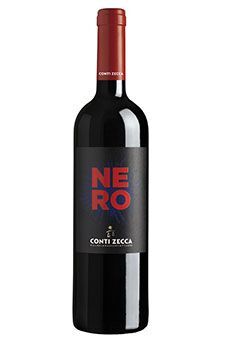
The level of various wines is unquestionably very encouraging: two particularly distinguished wines, house crus, are the Riserva Cantalupi Salice Salentino DOC, Negroamaro with small percentages of Malvasia Nera, and the Nero Salento IGT, Negroamaro with Cabernet Sauvignon. The former is of particular interest: yields in the vineyards have been drastically reduced and this Riserva ages for twelve months in 1200 liter oak casks where it takes on an intense ruby red color with garnet highlights with age, balanced flavors of red fruit and spice, and great length on the palate. The second cru, Nero Salento, can likewise boast characteristics of absolute excellence after a lengthy, 18 months period of barrel aging in French oak and an additional six months of bottle aging. On the palate, the red fruit and spices marry perfectly with elegant notes of vanilla and liquorice.

Domini Castellare di Castellina
Domini Castellare di Castellina
Biography
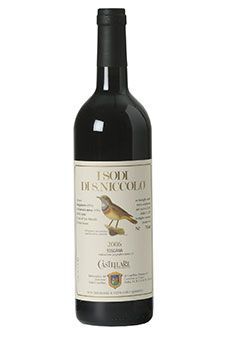
Castellare di Castellina is a 225 acres estate in the heart of Chianti Classico at Castellina in Chianti, created in 1968 by the fusion of five different small farms. In 1979 it was purchased by Paolo Panerai, editor in chief and publisher who, over the years, has turned it into one of most prominent estates of Chianti Classico. Vineyard acreage is 75 acres, 60 of which in a natural amphitheater of hills with a south-western exposure; annual production is approximately 240,000 bottles between DOCG and IGT wines. Red wines dominate, but there are three white wines as well, structured, intense, and long-lived. Yields per acre, particularly for the red wines, are below those permitted by appellation rules. Vine research, carried out immediately after purchase, enabled the estate to select the finest clones of Sangioveto, the local version of Sangiovese, and of Malvasia Nera. These are the varieties which give maximum quality and character, particularly in the case of I Sodi di San Niccolò, a wine included in the Wine Spectator list of the world’s 100 best wines two years in a row and with a raiting of 97/100 by Parker. The word “sodi” was used by Tuscan peasants to describe vineyards which needed to be worked by hand due to the hardness, or solidity, of the soil and the steepness of the slopes.
I Sodi di San Niccolò, a selection of the two finest vineyards (or crus) of the estate, demonstrates that the native varieties of the zone are perfectly capable of giving high-level wines, without the use of international grapes in the blend. Castellare (now known as Domini Castellare di Castellina, as there are now four domaines) has promoted the joint-venture with Domain Baron de Rothschild-Lafite created in 2000, Rocca di Frassinello. The first wines from the cellars, designed by famed architect Renzo Piano, were from the 2004 vintage and were produced under the supervision of oenologists Alessandro Cellai and Christian Le Sommer. The wines from the 2005 vintage have already received widespread recognition and maximum scores. The second label, Le Sughere di Frassinello, is included in the Top 100 of Wine Spectator.

Donnafugata
Donnafugata
Biography
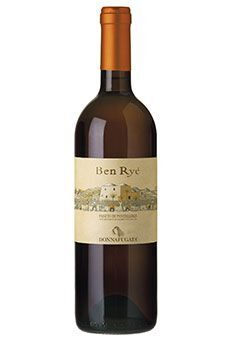
The name Donnafugata, literally “woman in flight”, refers to the story of Hapsburg queen Maria Carolina, wife of Bourbon king Ferdinando IV who, in the early 19th century, fled Naples at the arrival of the French troops of Murat and took refuge in the heart of the Belice area of Sicily. The writer Giuseppe Tomasi di Lampedusa, in his famous novel “The Leopard”, then indicated with the name Donnafugata the possessions of the Prince of Salina.
The Donnafugata firm was created by a family which, for 150 years, has strongly believed in the oenological potential of the land of its origins.
Giacomo Rallo and his wife Gabriella, both pure-blooded Sicilians and both convinced that, to grow, it is always necessary to be open to the changes which are occurring in the world, began a new project in 1983, an entrepreneurial adventure. The point of departure were the historic cellars of the family at Marsala and the vineyards of the Contessa Entellina area, and the search for exceptional quality arrived as far as the island of Pantelleria. Their children, José and Antonio, have now joined their parents in the firm, enabling the house to grow at an even faster pace and become one of the symbols of the rebirth of Sicilian wine.
The family project is based by total attention to every single detail in order to achieve objectives which are constantly more ambitious, that of realizing the entire potential of the territory with an absolute respect for the environment and the typical character of Sicilian wine.
This philosophy is even more present in the production of the firm’s most important wines, the crus of Contessa Entellina and of Pantelleria.
Mille e una Notte is a red wine which blends Nero d’Avola with small percentages of other native varieties, an impenetrable ruby red in color, ample on the nose and structured on the palate. Vigna di Gabri, instead, is a fragrant white wine, 100% Ansonica, named for Gabriella Rallo who deeply desired a wine of this type, a totally achieved example of the Ansonica grape which expresses all of its characteristics, a variety whose important potential has become even more widely accepted in recent years. Last but not least, Ben Rye, “son of the wind” in Arabic, a Passito di Pantelleria DOC, deep and of great complexity, a pride of the firm which proclaims its extraordinary character and expressiveness right from the start, from the amber-tinged yellow of exceptional brilliance.

Ferrari
Ferrari
Biography
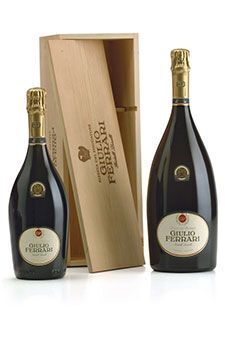
Is destiny written in a name? Improbable, it would seem, but it is a fact that the Ferrari firm of Trento, just like the racing car team of Maranello, is, in its sector, that of sparkling wine, the best known and most prestigious. And, just like the automobile company, the sparkling wine house bears the name of its founder, but is not run by his descendants. Because, like Enzo Ferrari, Giulio Ferrari, a native and nobleman of the Trentino region, who studied viticulture at Montpellier and completed his studies in Champagne, returning to his native region in 1902 to create a sparkling wine firm, had no heirs. For this reason, in 1951, at seventy years of age, he decided to sell his company to Bruno Lunelli who, after having worked as a shop assistant for the parents of Cesare Battisti, an Italian patriot hung by the Austrians, had opened a wine shop just a few doors away, near the cathedral of Trento. Ferrari, nonetheless, continued to be active in the firm until 1965, the year of his death. Bruno Lunelli, who at the time had only 63, left the reins of the company to his children four years later, perhaps with a presentiment of the premature death which would arrive four years later. But two years previously he had the satisfaction of inaugurating the company’s new headquarters at the gates of Trento, near the Ponte di Ravina bridge.
Ferrari’s supremacy in the production of high quality sparkling wine was gained through the efforts of three of his five children: Gino, the president of the company, Franco, who ran the wine shop near the cathedral, and Mauro, the oenologist, who perfected, in 1972, the legendary Riserva del Fondatore, the classic blanc de blancs of Giulio Ferrari, an all-Chardonnay cuvée from a single vineyard at Maso Pianizza, a true cru which, for soil and micro-climate, can be considered a masterpiece of nature. Made solely from grapes which are perfectly ripe, it is produced only in fine vintages with a period of aging on its lees which can last up to ten years. The object of tireless care and attention, it is an elegant Spumante, delicate, and exceptionally long-lived. It is the peak of a production pyramid of 4.8 million bottles annually, and this is the core business of a small empire which also owns a series of agricultural estates which produce still wines, the Surgiva mineral water, and the grappa distillery Segnana. The third generation of the Lunelli family is now in charge, and consists of three cousins: Matteo, vice-president; Marcello, oenologist; and Camilla, who directs contacts with the public and with the clientele. She is the first woman to arrive in an executive position in the firm.

Fontodi
Fontodi
Biography
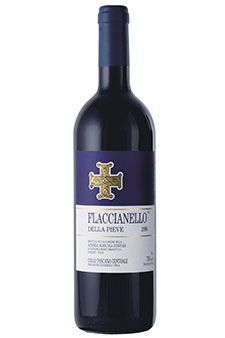
The Manetti family has been famous for generations in Chianti, but not for wine: its renown is linked to the production of the terracotta of Impruneta. A well deserved fame: it was the firm of Dino and Domiziano Manetti which produced the roof tiles for the restoration work on the dome of the cathedral of Florence and provided the flooring for the Uffizi gallery as well. Nowadays it is difficult to say whether the Manetti are better known for their wine or for the terracotta, even if their adventure in the world of wine is far more recent. The first step was the purchase, in 1968, of the Fontodi estate in the heart of the Florentine part of Chianti Classico, near the country church of San Leonino in a valley which opens up to the south of Panzano. The area has been known for centuries as “the golden slopes” for its exceptional position: the soil is difficult to work but the grapes are of exceptional quality. The sign that something had changed for the Manetti in their rapport with what had simply been a country house came in 1980, when the entire family moved to the property. It was the younger generation which took charge of the vineyards and the cellar, the young children of Dino, Giovanni and Marco, though always with the close supervision of the elder generation, their father and uncle.
In fact, it was with the next vintage, in 1981, that new wine was born alongside the traditional Chianti Classico and Chianti Classico Riserva, an offering that would create a sensation, Flaccianello della Pieve. The wine was conceived, along with the younger Manetti brothers, by a young oenologist, Franco Bernabei, a man with important ambitions. A pure Sangiovese from the best exposed vineyard of the property, the wine was fermented in a way which was both traditional and innovative: the period of skin contact was a lengthy one, but with a constant control of the temperature. After the initial phase, the wine, in the following March, went into small oak barrels for aging, French oak from the Massif Central, and after a lengthy aging period was given additional bottle aging time as well. Since then Fontodi has made enormous progress, the cellars have been enlarged, more land has been acquired (of the estates 275 acres, 175 are planted to vines, all cultivated according to the dictates of biological agriculture), new wines have been created, but the fame of the estate is linked to Flaccianello della Pieve, which in fine vintages truly reaches the heights. Other classy wines are not lacking in the estate’s portfolio: the spicy Case Via and the Chianti Classico Riserva from a special vineyard, Sorbo. Flaccianello is in a class of its own.

Leone de Castris
Leone de Castris
Biography
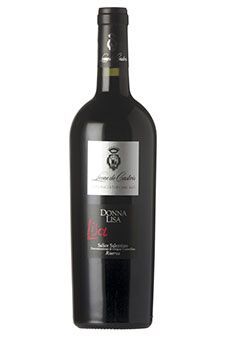
With Piernicola de Castris we are in the presence of the fifth generation of a dynasty of wine producers active in the Salento peninsula for three centuries. It was 1665 when one of his ancestors, Duke Oronzo Arcangelo Maria Francesco, Count of Lemos and nephew of Francesco and Ferrante, both Spanish viceroys in Italy, founded a cellar at Salice Salento. With such satisfying results that they were convinced to sell their possessions in Spain in order to invest the sums in the Apulia, creating a small empire of 12,500 acres of land. The two thousand square meter cellar built at the time, the XVII century, has become, today, an enormous white and pink parallelepiped of 40,000 square meters with various buildings and a squared-off edifice which towers over the entire complex. At Salice thy call it “the company of Don Pierino”. Don Pierino was the grandfather of Piernicola, Piero Leone Plantera, who married Donna Lisetta of the de Castris counts, the last heiress of the cellars. Don Pierino greatly influenced the entire story of the firm from 1900 to the 1960’s. It was he who transformed it into a modern company: he had already begun to market the wine in bottles in 1925, in a period when, even in northern Italy, wine was still sold in bulk, in barrels or in demijohns. Five Roses, his best known wine, was the first rosé to be sold in bottle in all of Italy. But this came later, the final year of World War II, when northern Italy was still under Nazi occupation. General Charles Poletti, supply commissioner for the allied armies, had ordered a large supply of rosé wine, but he wanted an American name. And so Five Roses was born, named for an area called Cinque Rose (“five roses”) of the fiefdom of Salice because, for several generations, every de Castris had five daughters. After a period as sales director begun at the request of his father, Piernicola became general director at the end of the 1990’s. He managed to inject a new dynamism into the firm, renovating the cellars and replanting the vineyards, experimenting new grape varieties even if he continued to give the greatest emphasis to the traditional grapes of the zone. The most satisfying wines are made, in fact, from Negroamaro, the typical grape of the Salento peninsula, the basis of the blend of Donna Lisa, the Salice Salentino Riserva wine of the house, which has received much recognition and many prizes: an important red wine with aromas of cherries ad notes of tobacco, soft and velvety, a great expression of the potential of the peninsula.

Livio Felluga
Livio Felluga
Biography
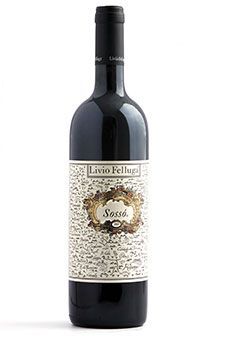
Brother of Livio Felluga, Marco Felluga belongs to the same dynasty of producers of wine. With a childhood at Grado and oenological studies at the school of Conegliano, it was inevitable that he should fall in love with the nearby Collio hills, where a magical landscape is one with a climate and soil with important potential for fine wine. From the lagoon of Grado to the hills of Gradisca d’Isonzo, therefore, it was only a short step for Felluga, who founded his own cellar at the latter spot.
The balance between modern innovation and modern technology on the one hand, and the traditions of the zone on the other, have made the house a reference point for the entire territory. It is no accident that the local producers consortium has been guided by Felluga in recent years. Today, to follow in the footsteps and in the philosophy of absolute quality is his son Roberto, the fifth generation of the family. Vineyards amount to 300 acres and production to 600,000 bottles annually, and two wines top the quality pyramid: Carantan, a red, and Molamatta, a white. They make Marco Felluga a widely respected firm, but only the leader of a group with three other estates. The most important is Russiz Superiore, 240 total acres and 175 planted to vines, a place imbued with the history of Friuli whose owners, in the 13th century, were the Torre e Tasso princes.
Acquired in 1966 at Capriva di Friuli, its annual production is 200,000 bottles and its leading labels are the white Col Disôre and the red Riserva degli Orzoni.
The Castello di Buttrio estate, instead, was purchased in 1994 and is endowed with a rich patrimony of vineyards planted with selections of native grapes from the old vineyards of the property. Two wines are produced: the white Castello di Buttrio-Ovestein and the red Castello di Buttrio-Marburg. The last property to become part of the group consists of 125 acres of vineyards at San Casciano Val di Pesa, near Florence in Tuscany. This estate, San Nicolò a Pisignano, produces a Sangiovese-based cru, Sorripa.

Lungarotti
Lungarotti
Biography
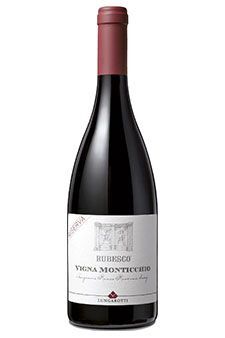
The Lungarotti cellars were founded at Torgiano in 1962 just a few kilometers from Perugia and Assisi in Umbria, and from that moment on it became a reference point for the oenology of the entire region. Giorgio Lungarotti, who had created the firm to ferment the grapes of the various landed possessions of his family, has been defined as “the man who, after Saint Francis, has given Umbria the greatest visibility in the world”. His wife, Maria Grazia, remembers him as “a pioneer”. Overstated? Perhaps, but Giorgio Lungarotti, who died in 1999, was the first to create fine wine in a region which, up till then, had little to show in terms of quality wine. To give them a certain recognition all over the world, exporting half of his production. And up until his last days, 88 years old, he was still more foresighted than others when wine was discussed. After his death, the direction of the house has passed into the hands of his daughter Chiara, aided by her sister Teresa Severini, while Maria Grazia directs the work of the Lungarotti Foundation, well known for its work in spreading the culture of wine. The house, in fact, has created at Torgiano one of the world’s most important museums around the theme of wine, compiling an historic and artistic documentation with few equals. The family continues to direct the firm, working with a full respect for values which join tradition and history to territory and adds in an innovative spirit open to experimentation and new developments. Future-oriented, the firm is nonetheless firmly anchored in the present, and a few years ago acquired an estate at Montefalco in order to include Sagrantino in its wide range of wines. The most prestigious Lungarotti wines, however, are the lengthily-aged red wines (only marketed four or five years after the harvest) from two crus: the Rubesco Vigna Monticchio Riserva, a blend of Sangiovese and Canaiolo, and San Giorgio, which uses Caberent Sauvignon along with the regions native grapes. This was the first Super Umbrian of the region: first produced in 1977, it is released only in superior vintages.

Marchesi di Grésy – Azienda Agricola Martinenga
Marchesi di Grésy – Azienda Agricola Martinenga
Biography
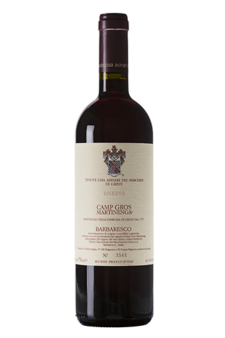
Martinenga, “a place which is sacred to the god Mars”, was the name given by the ancient Ligurian tribes to the woody spot just below the height beneath which they had found refuge (in Latin, asylum) from the Roman legions which, after conquering the nearby city of Alba, prepared to take control of the surrounding area. Two thousand years later, the place names of this part of Piedmont are still linked to these remote events. Asili and Martinenga, in fact, are among the most famous vineyards of Barbaresco, the ancient barbarica sylva (“barbarian woods”). And it is on the Martinenga vineyard, and other splendid possessions of the estate of this name, that the di Gresy marquises have founded their renown as producers of excellence.
It was in 1973 that Alberto di Gresy began to ferment the Nebbiolo grapes of his 27 acres of proprietary vineyards, creating wines which were considered among the finest of the Barbaresco appellation. The three Nebbiolo-based crus, Martinenga, Gaiun, and Camp Gros, symbolize and incarnate all the elegance which this superlative terroir regularly, even in difficult vintages, manages to express.
The production philosophy of Marchesi di Gresy is based on scrupulous and careful vineyard work which aims at the finest possible grapes, and cellar decisions which respect both tradition and research for the new. The results are absolutely excellent, both with the classic native grapes and with international varieties such as Chardonnay, Sauvignon, and Merlot. But it is the Barbaresco Camp Gros which is the essence of the great wines of Piedmont; first produced in 1978, and since then only in superior vintages, it is a selection of a small part of the Martinenga vineyard which rises towards Rabajà. A “summa” of the oenological excellence of the Langhe area in which environment and biology, together with the works of man, combine to create extraordinary characteristics of complexity and balance and confer exceptional aging ability as well.
In addition to the Martinenga estate, Marchesi di Gresy can rely on its Monte Aribaldo property in the township of Treiso, where Dolcetto, Chardonnay, and Sauvignon are cultivated, and on the La Serra and Monte Colombo properties, excellent sites for Moscato, Barbera, and Merlot.